Carl’s art prints divide by technique into intaglio, relief and serigraph.
As noted in the introduction, Carl had been whittling and carving since he was a boy. Part of his exploration of printing media at Vancouver Community College, where he had access to presses, allowed him to work linoleum and woodcut print blocks (grouped as relief). Where possible, those blocks that were used to create prints are shown with the final work.
Intaglio covers drypoint, where channels for the printing ink are carved directly into a metal plate, and etching, where an acid bath creates the ink channel in those parts of the metal plate not protected by a resistant coating. It has not always been possible to determine the difference in the case of individual prints, and most of the plates were destroyed or lost.
The serigraph is the art-gallery cousin of the commercial silk-screen print, for many years the primary medium for posters and tee shirts as well as imprints on industrial equipment. At its simplest the silk-screen print is close cousin to the stencil: in that form it is typically a sheet of thick paper or plastic; there are “open” regions inside which a child can colour an underlying sheet of paper and a shipper can quickly form clear lettering on a box or crate. The silk-screen print uses silk or a synthetic fibre, stretched tightly on a frame; a printing ink is spread out at one end and a rubber squeegee is used to press the ink evenly through open areas in the screen. In commercial silk-screen prints the open areas are typically created by cutting away parts of a film, then fixing the remaining film on the screen. Multiple screens can be layered, but the effect sought in posters is usually flat and bold, to communicate directly and with immediacy.
Carl’s efforts were to make the resulting image as close to his drawings and paintings as possible. He used water-soluble glue on the screen, which was not dissolved by the oil-based inks. Initially he drew the positive image in oil-based tusche directly on the screen and then applied water-based glue, which would have adhered to the screen but not the tusche; when the tusche was cleaned out with oil-based solvent, the glue was left behind; but he found this unsatisfactory and began to create textures by applying paper and cloth to the still-wet glues, so that the surface became mottled with small spaces that would admit printing ink. For sharp lines he meticulously applied the glue with a brush, and when you keep in mind that the glue must lie on either side of a fine line you want to print, this requires enormous patience and skill.
The prints are reproduced in approximate chronological order. Prints intended for sale are by convention signed, dated and numbered, so that this was in all but a few cases easy to accomplish.

1969 Etching or drypoint
print 3/4
Initialed on plate, signed, titled, and dated
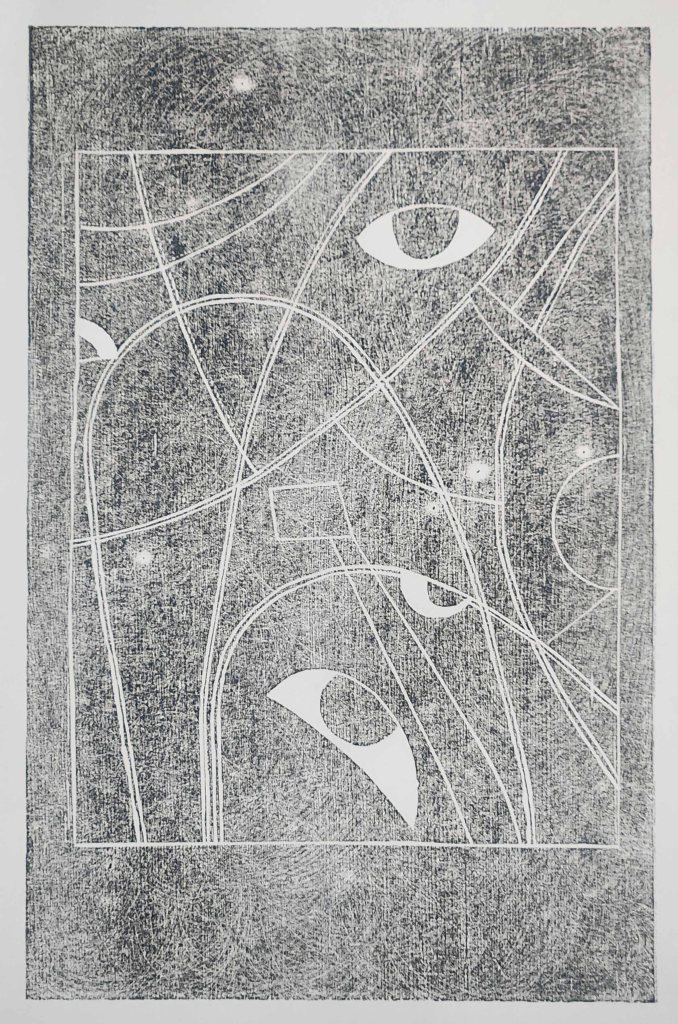
Wood block print 1969?,
23.1 cm x 35.4 cm (approx.), 1 colour,
Artist’s Proof, undated, unsigned.
The likely date derives from the conjecture that this would have been done at the printmaking course. Carl had a great admiration for Paul Klee and Wassily Kandinsky, hence the also very much conjectured title.
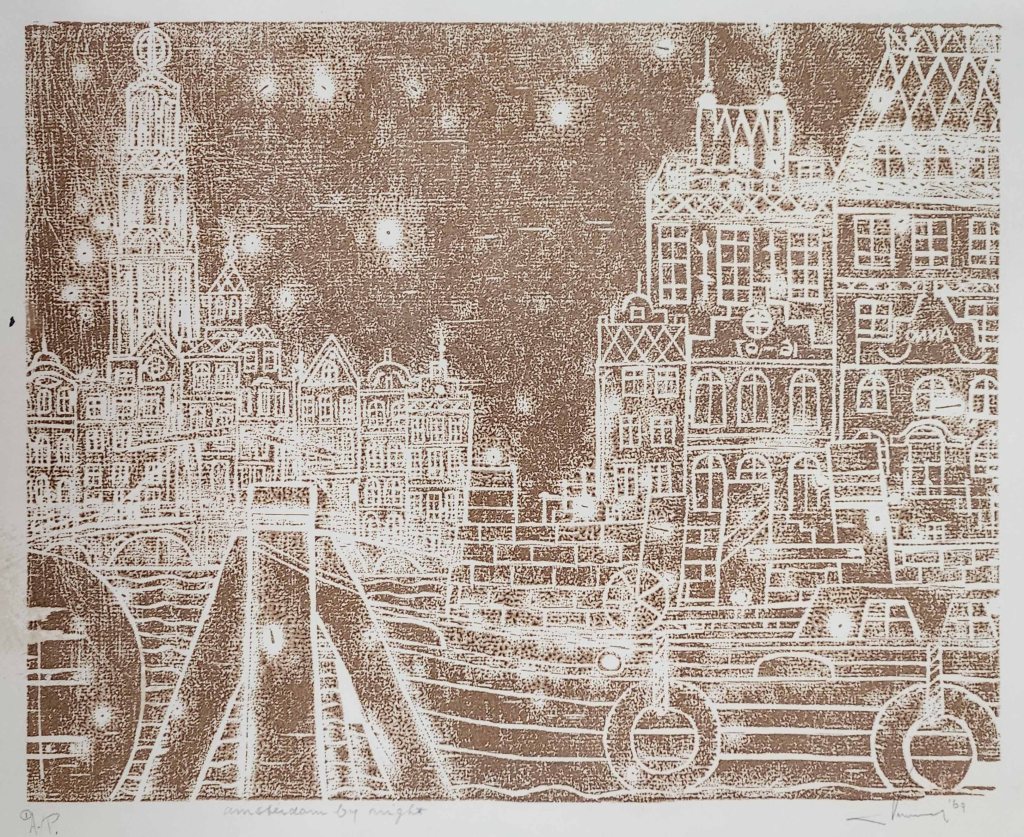
Wood block print 1969,
35.4 cm x 28.2 cm (Approx.), 1 colour,
Artist’s Proof, dated, signed.
This was probably done at a printmaking course at the art department of Vancouver Community College, now Emily Carr University. Those starry blobs look like a failure – they’d have been caused by small indents in the surface – but they do give it an ethereal quality. The white lines would then have been carved, something Carl was a master of; the splintered area on the lower left edge is also likely an accident. Notice the reversal of “Anno 16-07,” a common error for first-time printmakers.
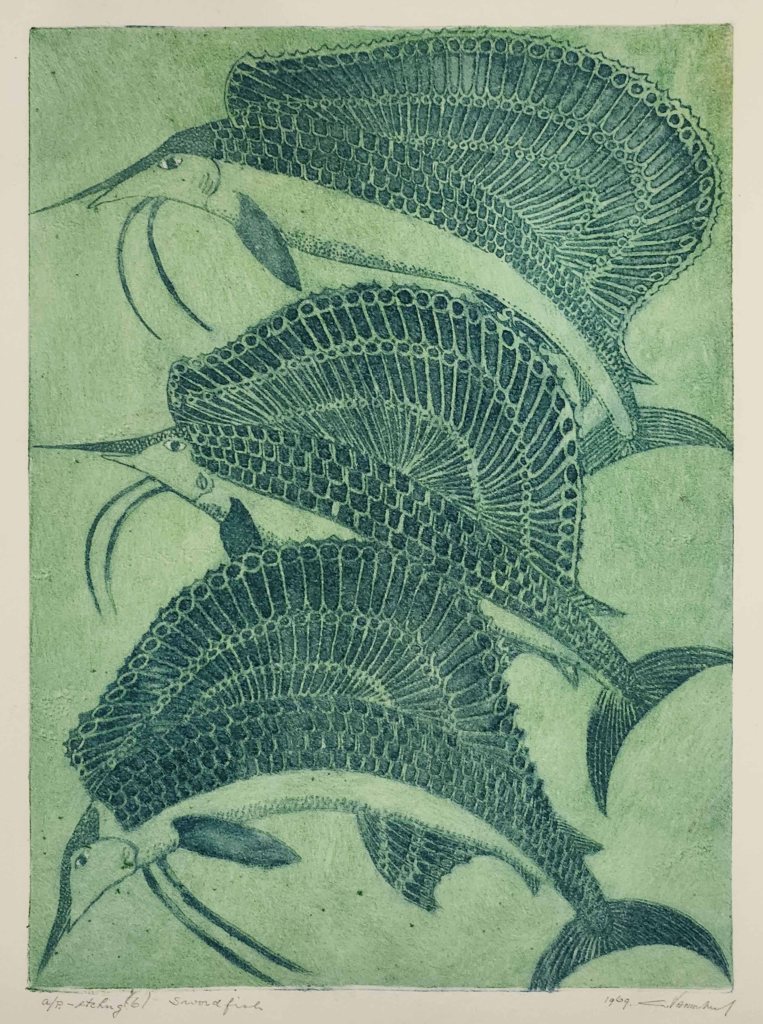
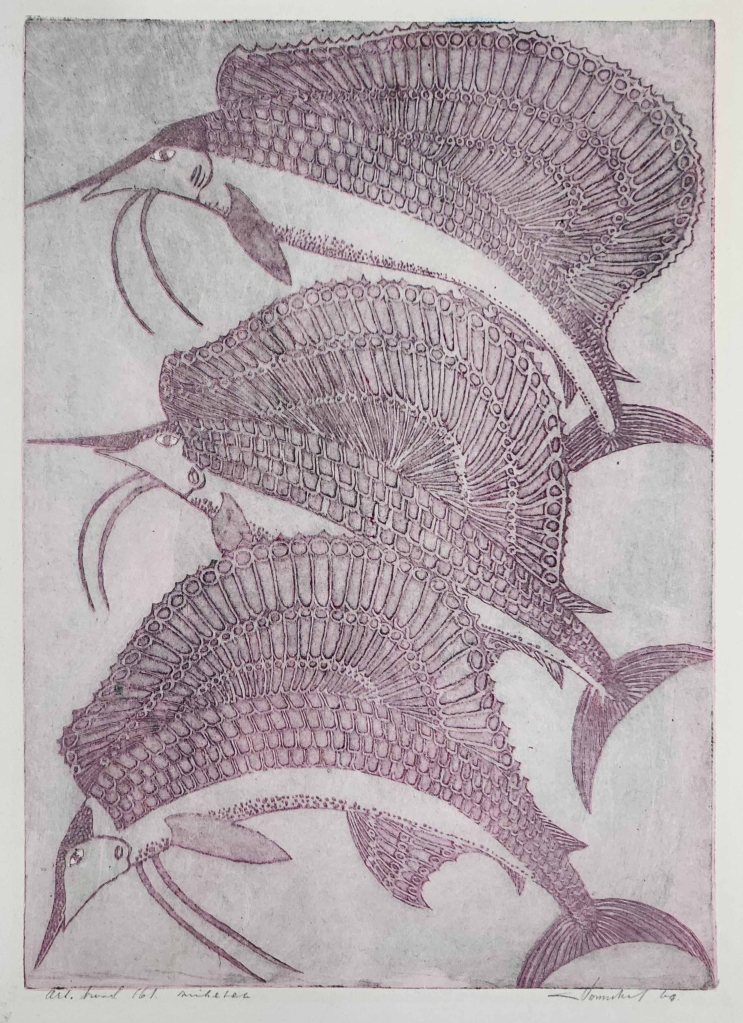
zinc etching, 1969, Artist’s proofs
25.1 cm x 34.7 cm (approx.)
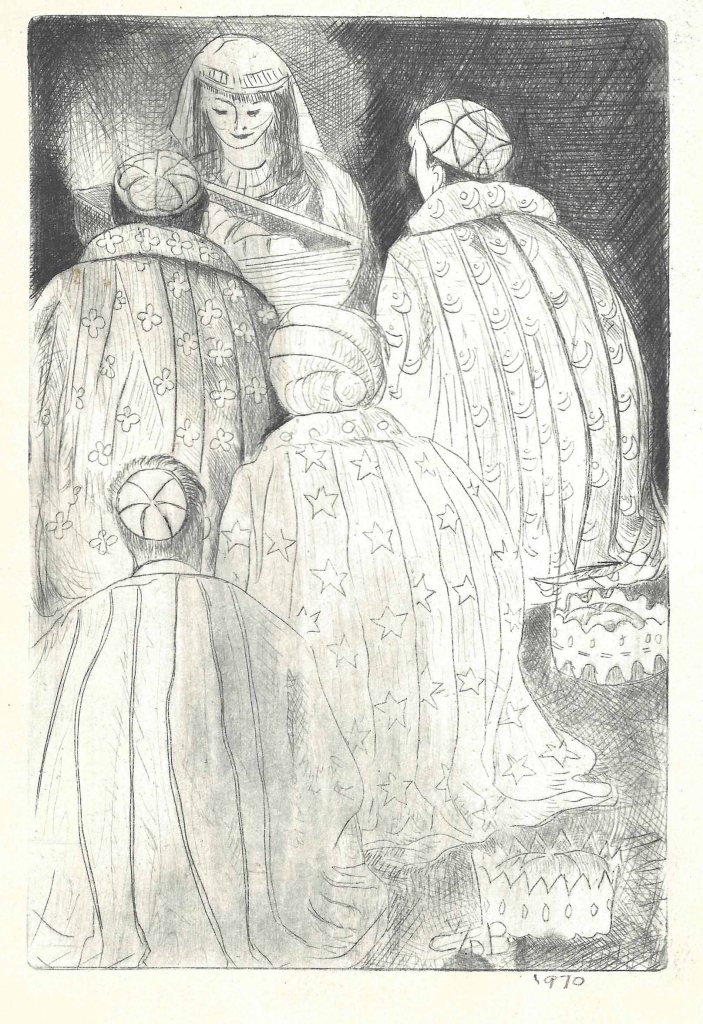
1970 Etching or drypoint
unnumbered
Initialed on plate, dated.
These were sent to friends and family as Christmas cards, but only to a select few because the print run was very small. Carl always intended to build a press he could use to do full runs of wood blocks, etchings and drypoint. He rescued several enameled basins from the garbage at the hospital x-ray department so he could do new etchings. But the printing press never came to fruition and so these delicate, luminous scenes are exceedingly rare.
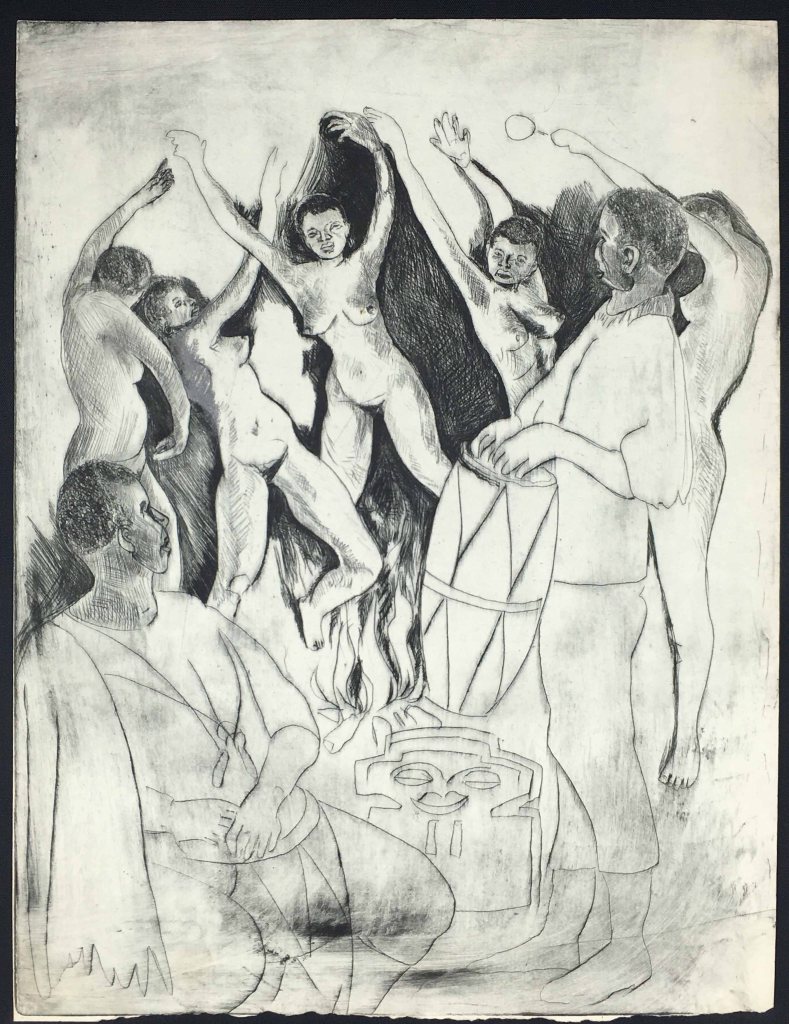
Drypoint
22.8 cm x 29.7 cm (approx.)
undated (about 1970), unsigned, unnumbered
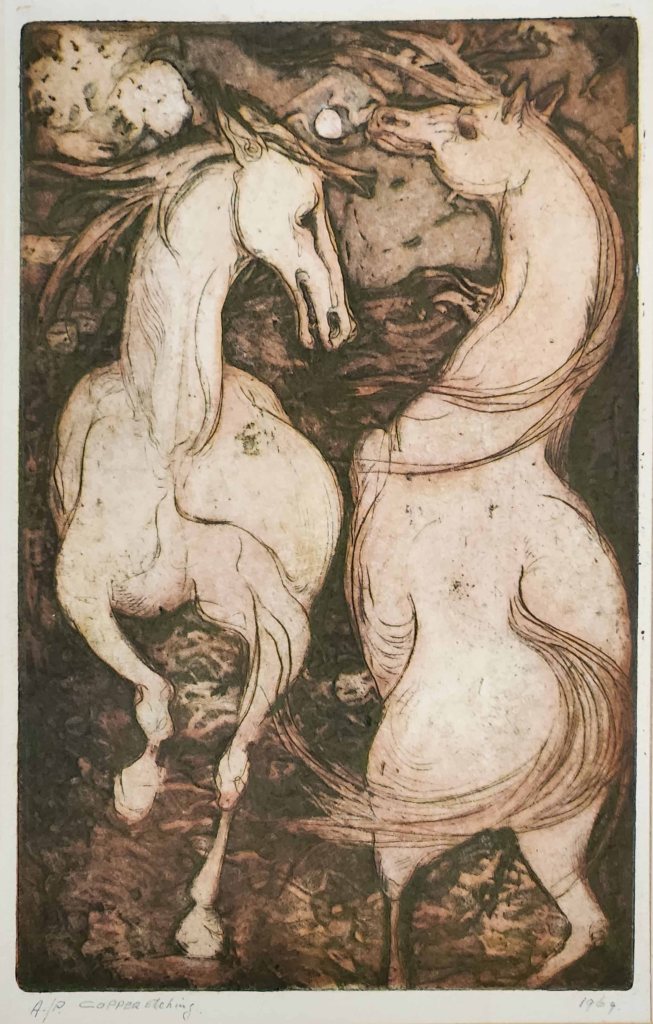
1969 Copper Etching
19.4 cm x 30.2 cm (approx.)
1969, A.P., dated
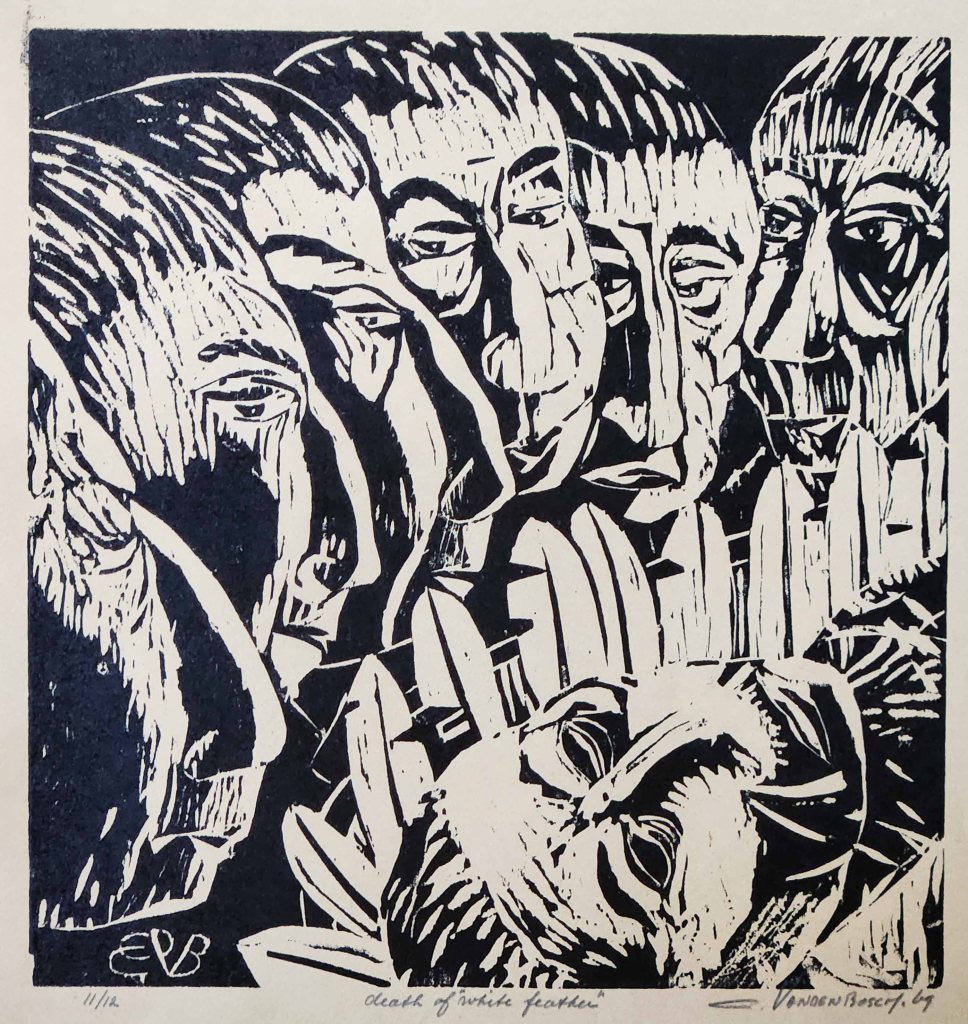
Wood block Print, 1969, one colour
29.0 cm x 29.7 cm (approx.)
Twelve signed prints were made, of which this is number 11.
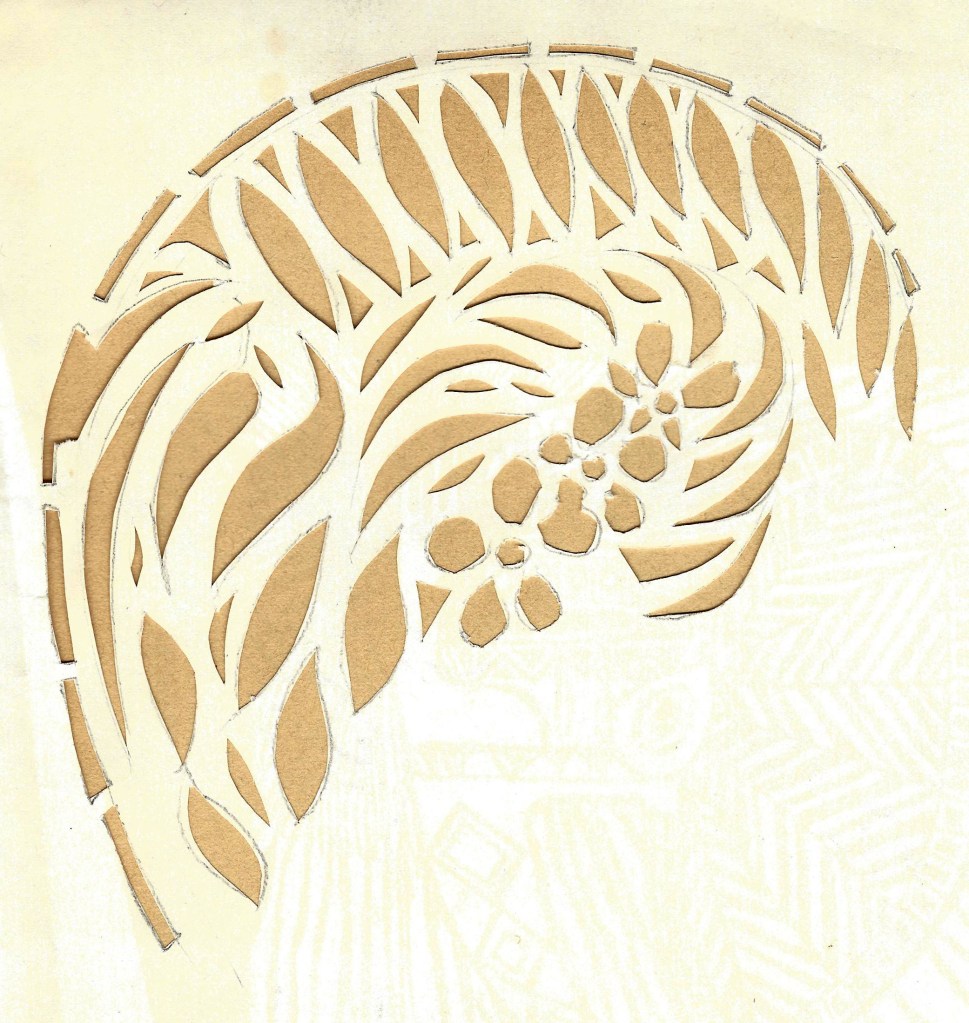
cm x cm approx.
unsigned
The darker areas have been cut out, probably with an art knife and are showing an underlay sheet of paper. The lighter areas are the stencil itself, a heavy paper stock. Some pencil-marks are still visible where he drew the design on the paper.
This illustrates the concept of the stencil. It may be that Carl created this when he took a course in printmaking at Vancouver Community College, in which case it dates to about 1970. It doesn’t look to have been used but it is consistent with his style in later serigraphs.
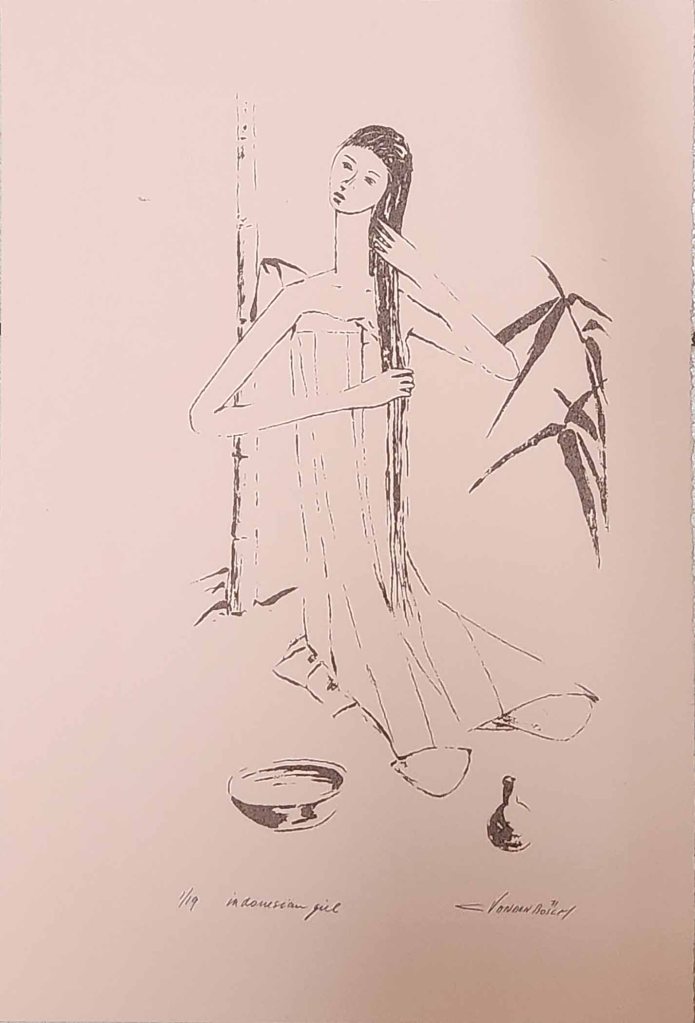
1971, 9.5 cm x 16.0 cm (approx.), 1 screening on coloured art paper.
Reproduced here, 1/19
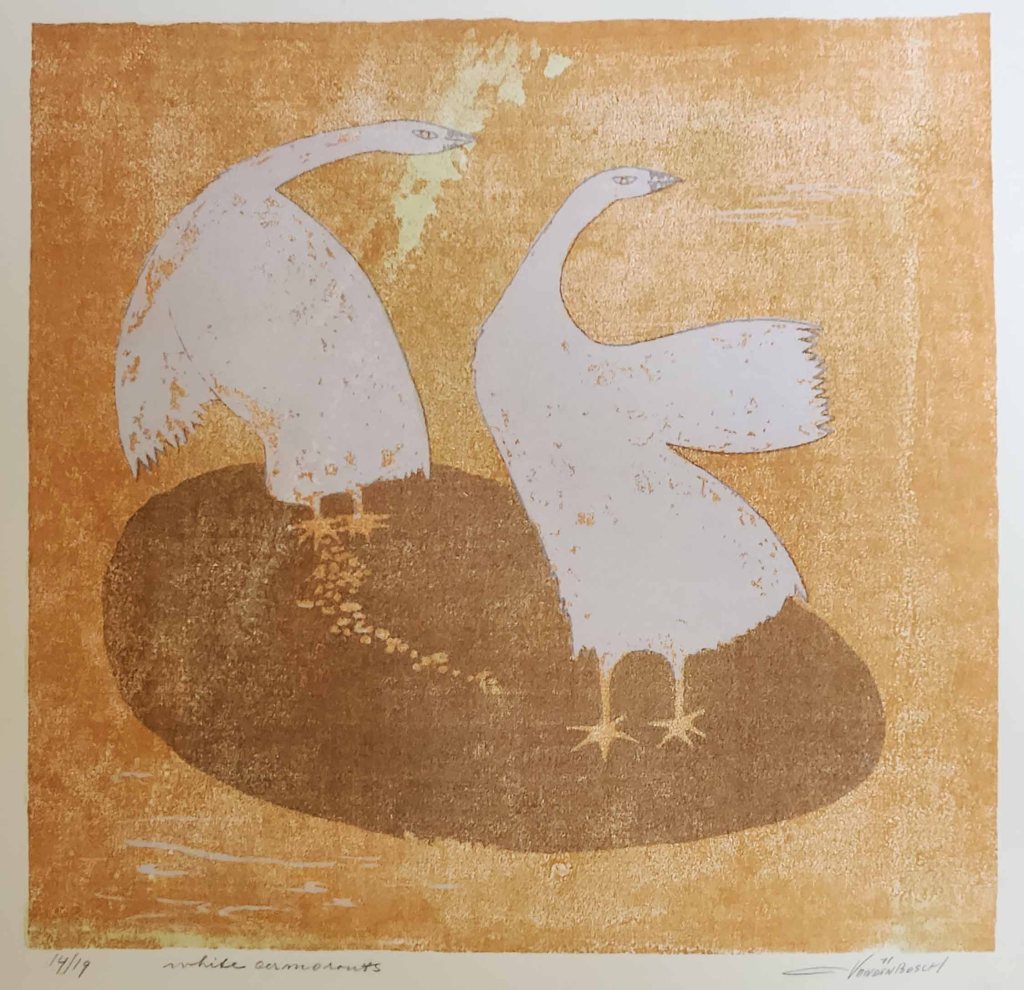
Serigraph 1971, 29.9 cm x 28.4 cm (approx.), 5 screenings.
Reproduced here, 14/19
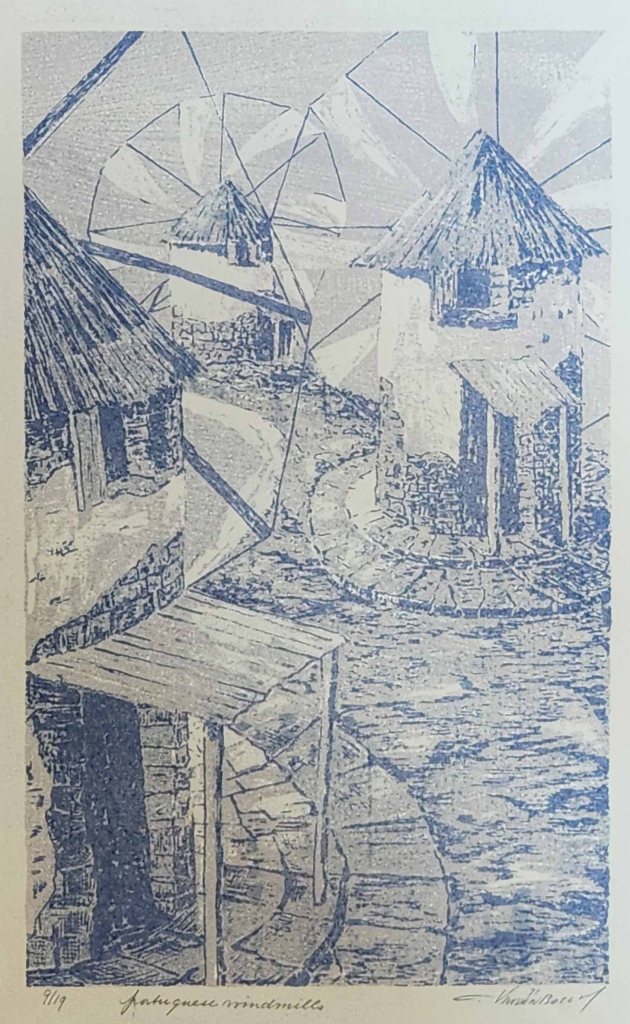
Serigraph 1971, 22.8 cm x 38.1 cm (approx.), 3 screenings.
Reproduced here, 9/19
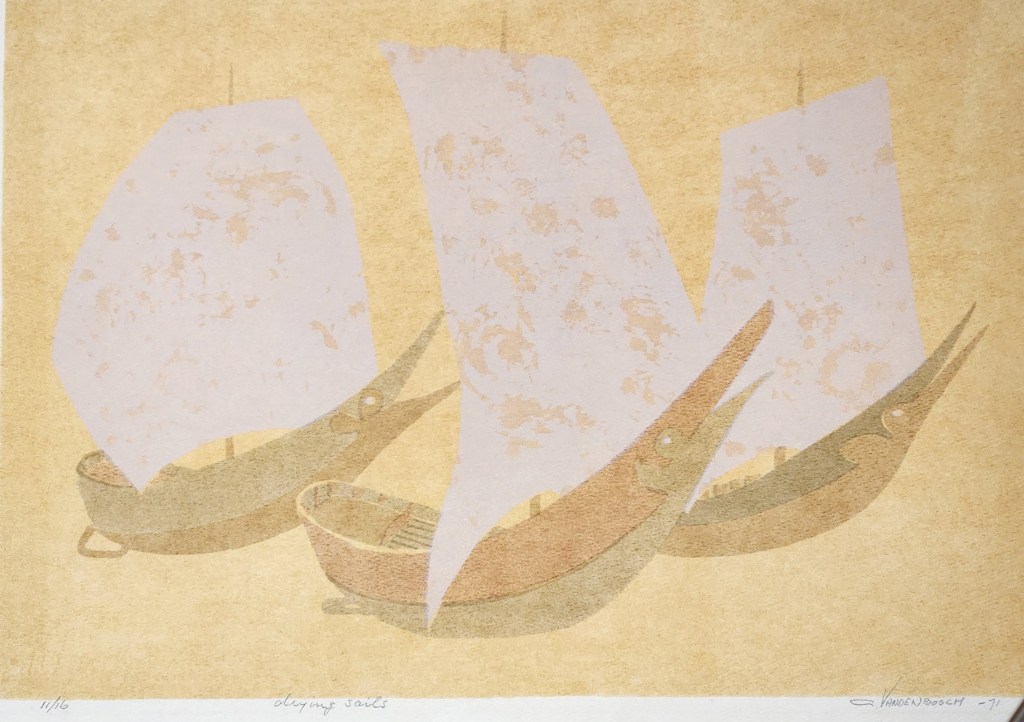
Serigraph 1971, 44.7 cm x 30.8 cm (approx.), 4 screenings.
Reproduced here, 11/16
This is an early example of Carl’s efforts to create texture with an essentially flat medium. All the surfaces, but especially the sails, show texturing. My guess is that the sails were accomplished by pressing crumpled paper or even plastic wrap into the glue before it dried, thereby lifting some away and creating “holes” through which the background showed
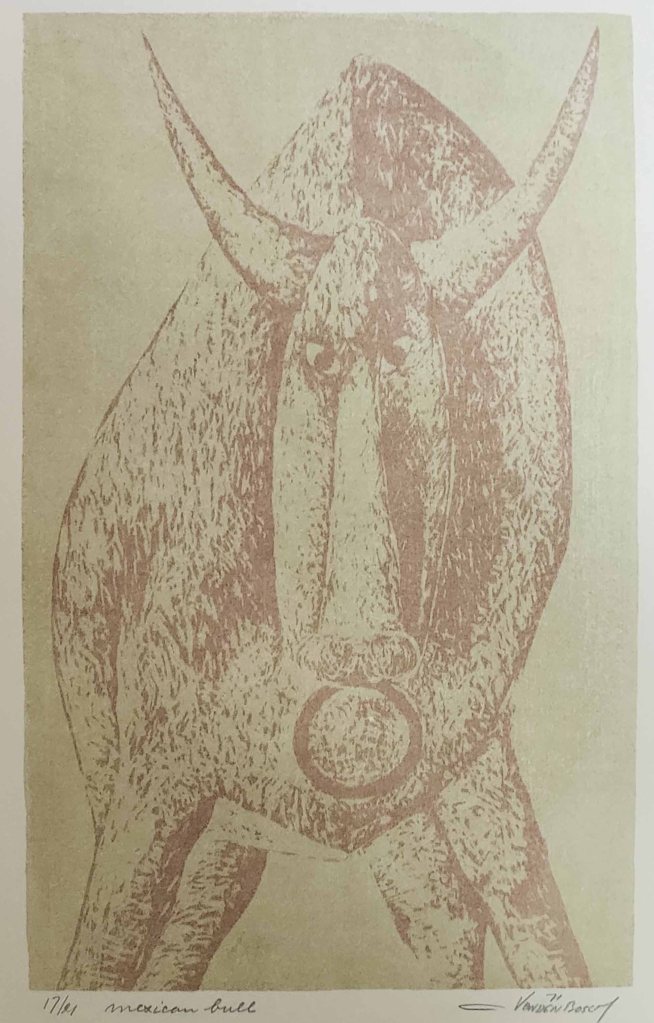
Serigraph 1971, 19.1 cm x 30.7 cm (approx.), 2 screenings.
Reproduced here, 17/21
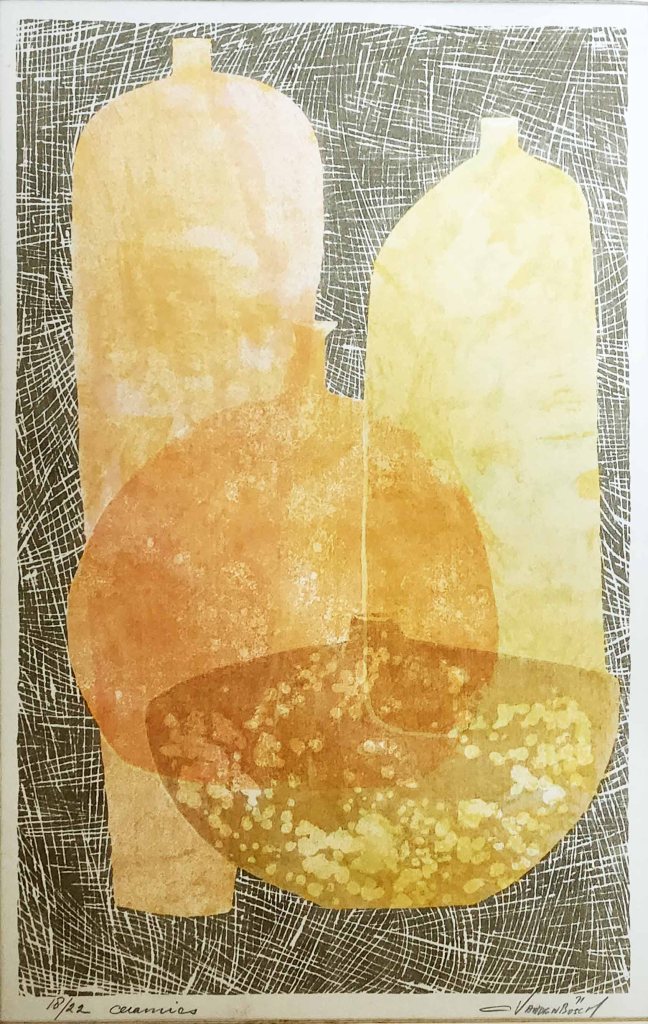
Serigraph 1971, 22.2 cm x 35.5 cm (approx.), 5 screenings.
Reproduced here, 18/22

Serigraph 1971, 28.1 cm x 35.8 cm (approx.), 5 screenings.
Reproduced here, 6/20
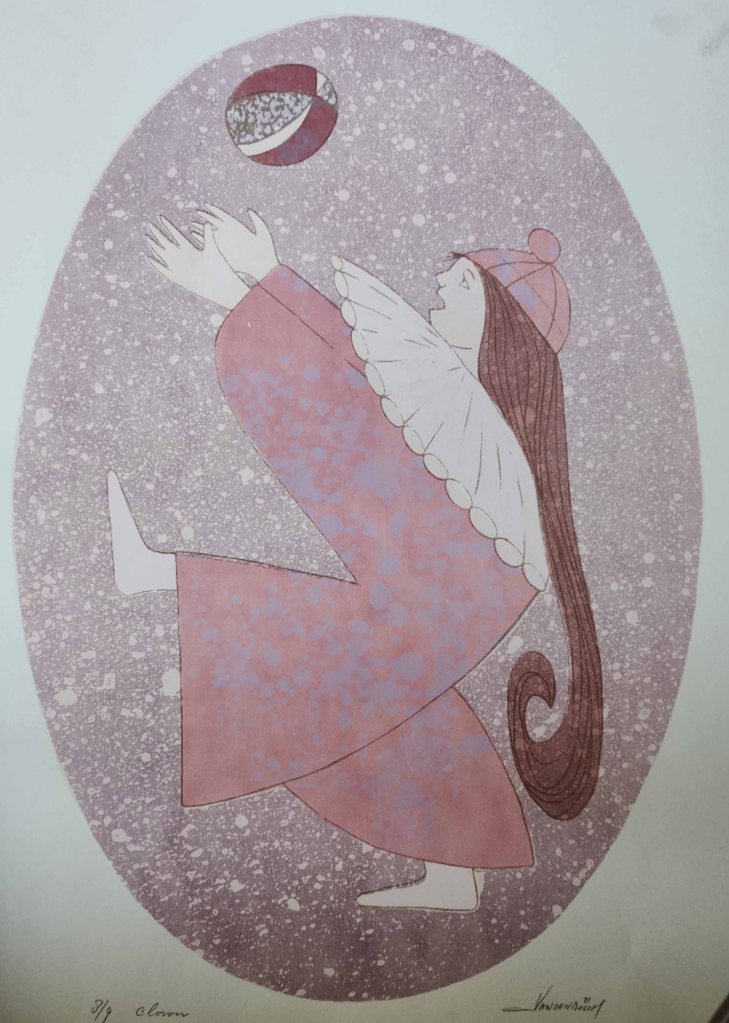
Serigraph 1971, 30.1 cm x 43.5 cm (approx.), 6 screenings.
Reproduced here, 8/9
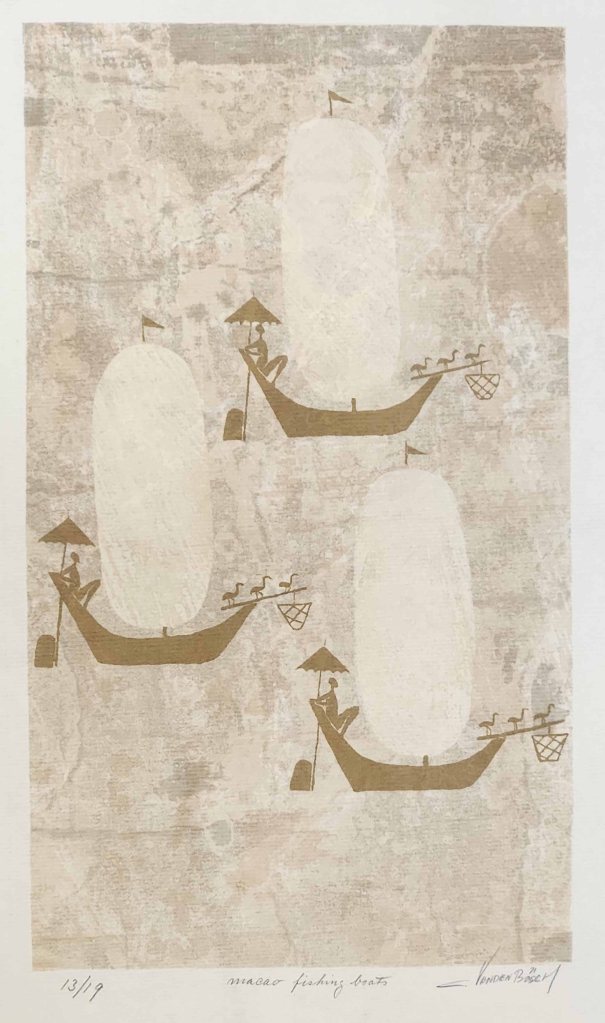
Serigraph 1971, 20.5 cm x 35.8 cm (approx.), 5 screenings.
Reproduced here, 13/19

Serigraph 1971, 42.8 cm x 33.8 cm (approx.), 2 screenings.
Reproduced here, 5/17
This is a characteristic stance for a herd facing a potential threat or even a fierce wind as a kind of phalanx. If there are young to protect, these will then be kept in the middle.
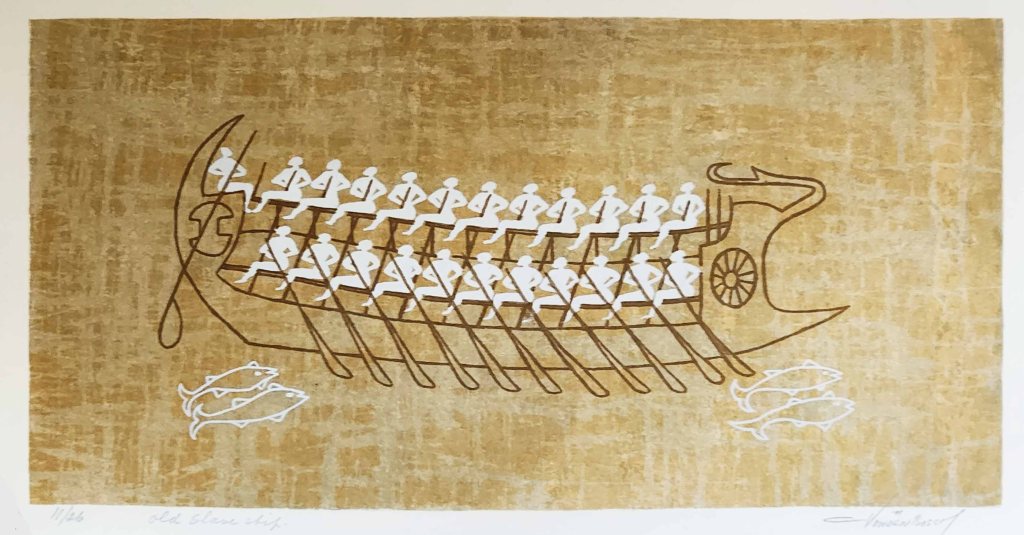
Serigraph 1971, 35.6 cm x 17.8 cm (approx.), 5 screenings.
Reproduced here, 11/26
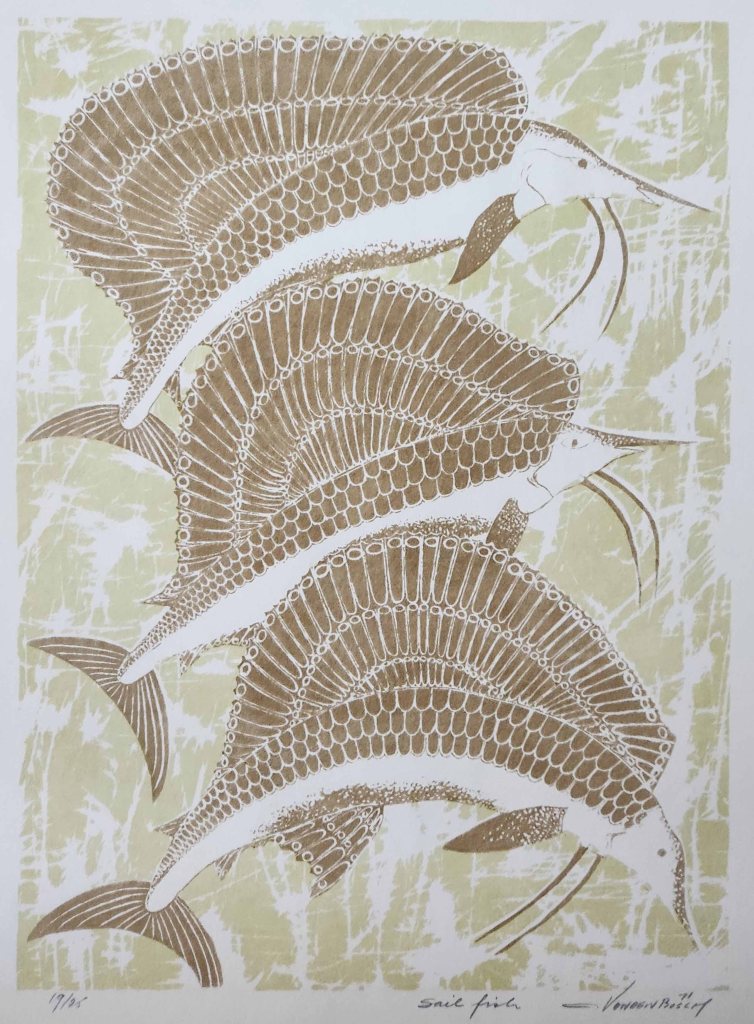
Serigraph 1971, 26.0 cm x 35.6 cm (approx.), 2 screenings.
Reproduced here, 19/25
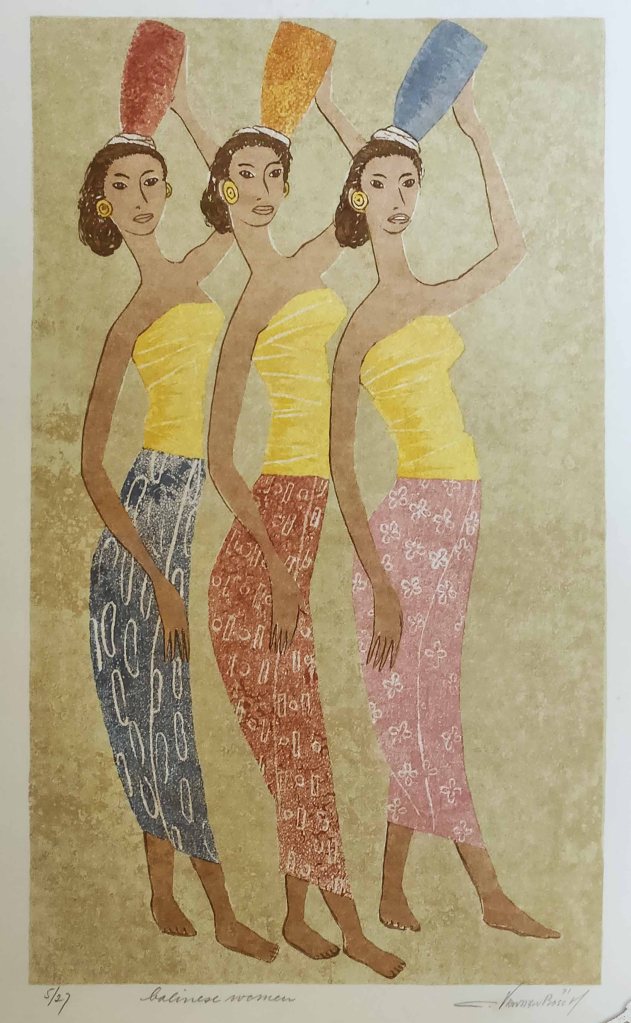
Serigraph 1971, 22.8 cm x 38.0 cm (approx.), 7 screenings.
Reproduced here, 5/27
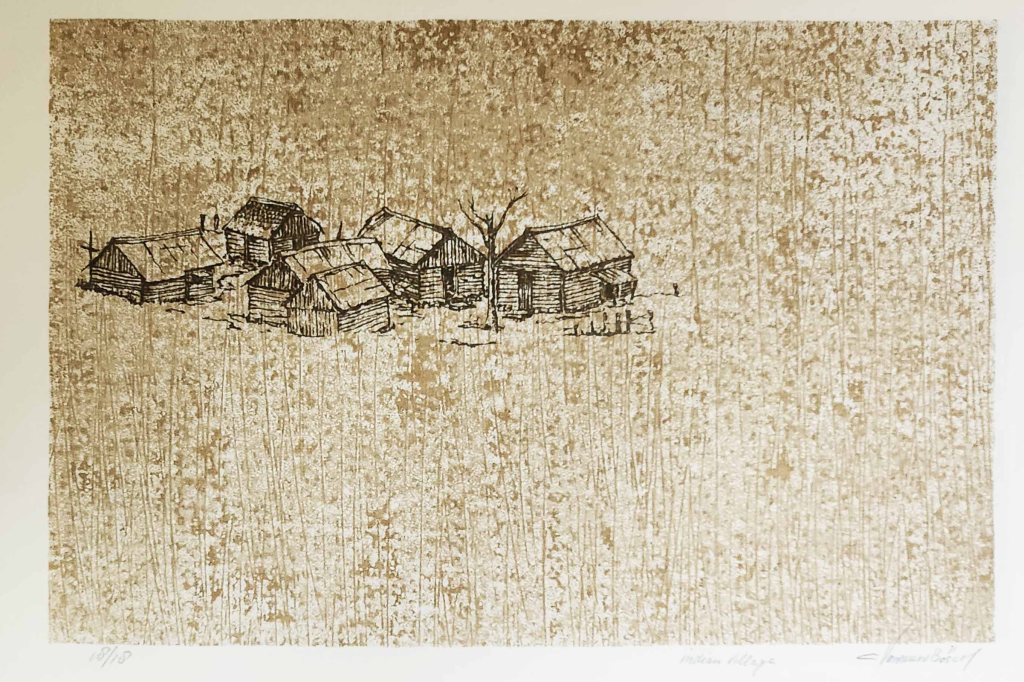
Serigraph 1971, 34.9 cm x 22.9 cm (approx.), 2 screenings.
Reproduced here, 18/18

Serigraph 1971, 22.9 cm x 37.4 cm (approx.), 2 screenings.
Reproduced here, 10/25
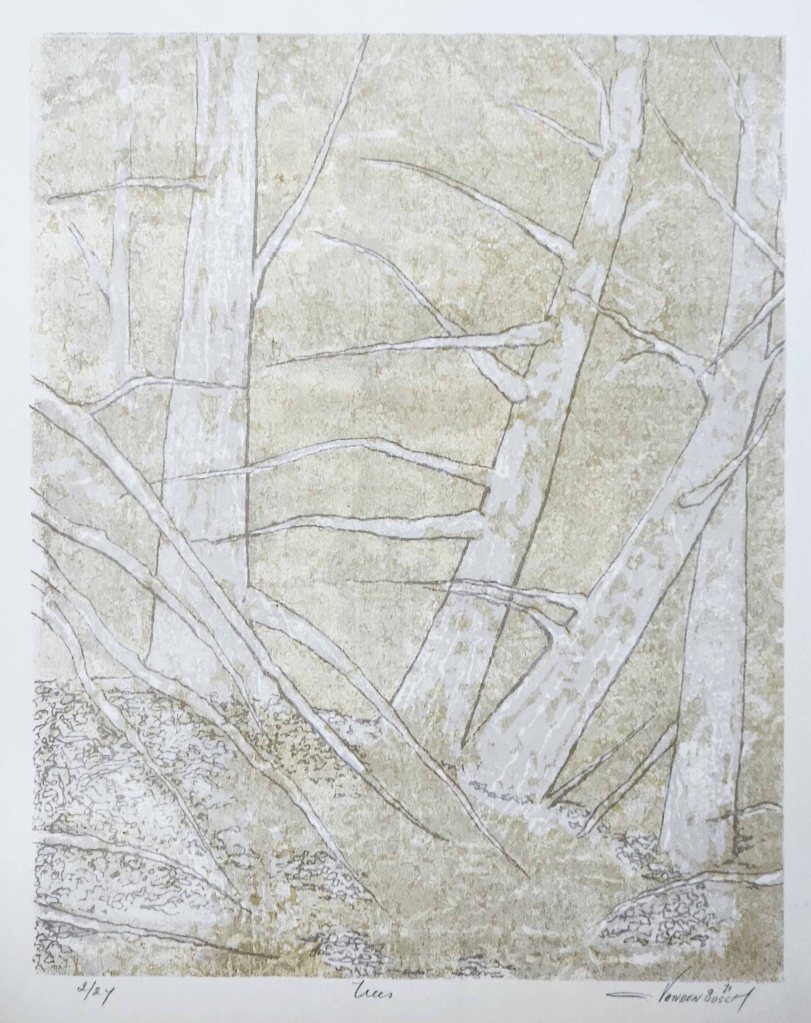
Serigraph 1971, 28.0 cm x 34.2 cm (approx.), 3 screenings.
Reproduced here, 2/24
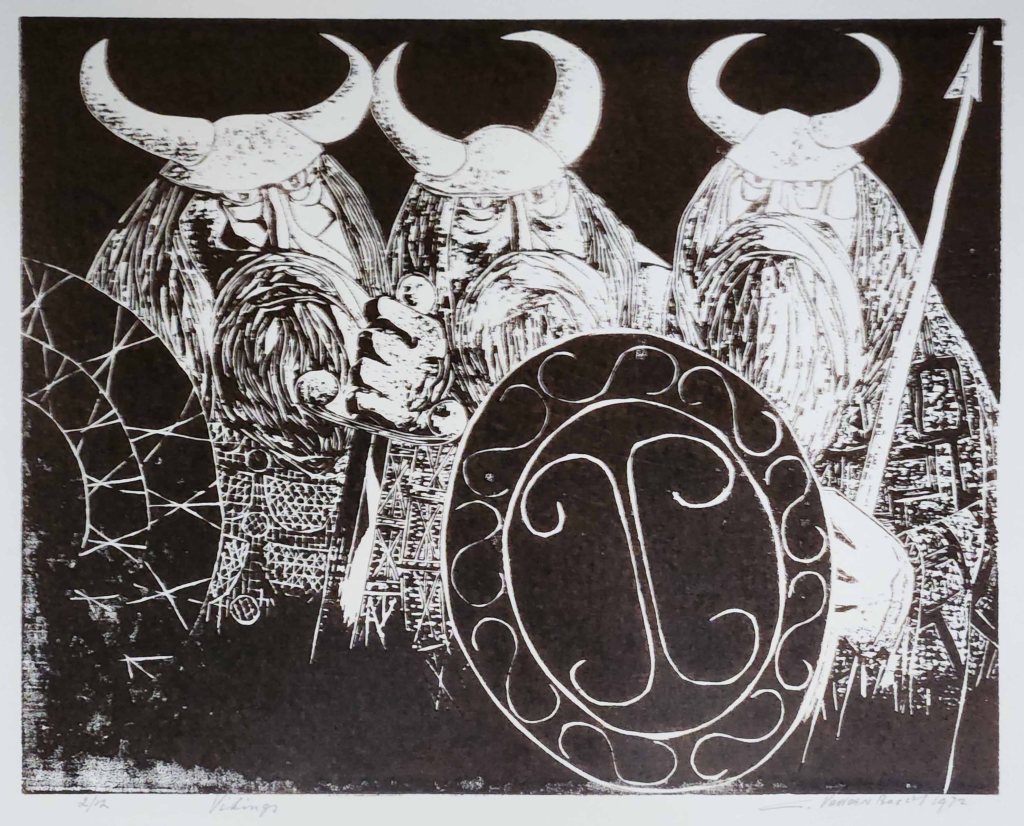
Woodcut, 1 pine block, 1 colour
1972, 35.6 cm x 28.3 cm (approx.)
Reproduced here, 2/12

Wood block Print, 1972, four colours
23.3 cm x 35.3 cm (approx.)
Sixteen signed prints were made, of which this is number 3.
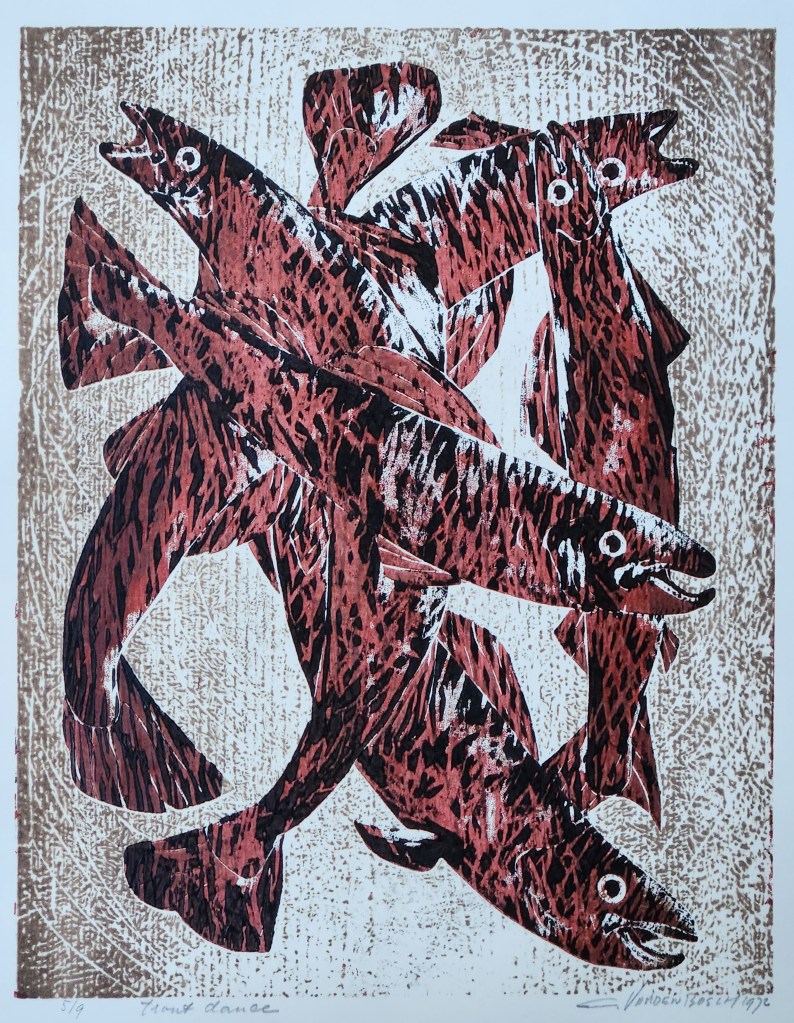
1972 Wood block Print – 1 Spruce block, 3 colours
28.2 cm x 35.4cm (approx.)
A total of nine prints, signed and numbered by the artist, are in existence, of which this is number 5.
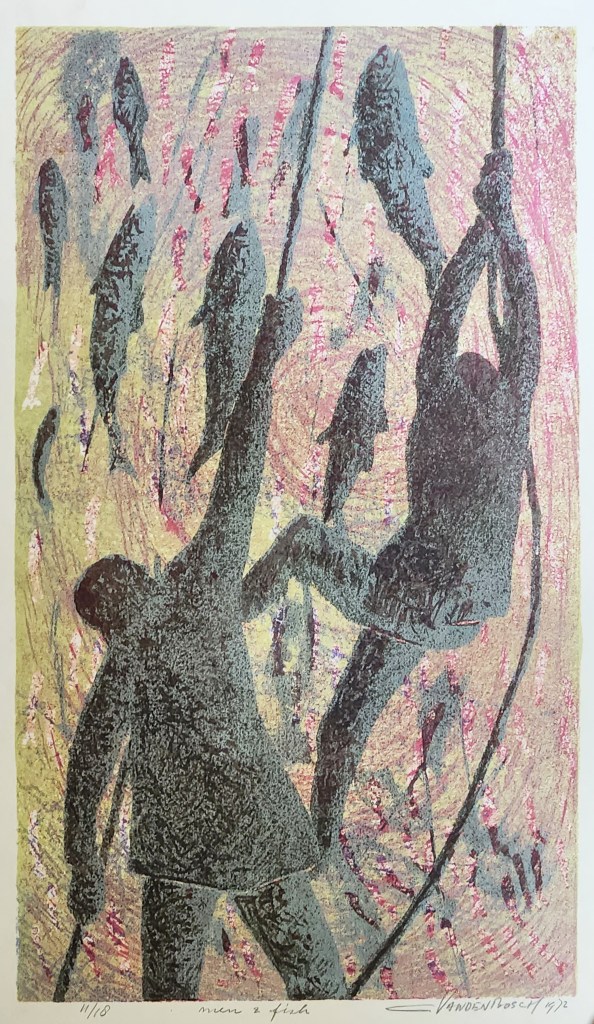
Serigraph 1972, 20.5 cm x 35.7 cm (approx.), 5 screenings.
Reproduced here, 11/18
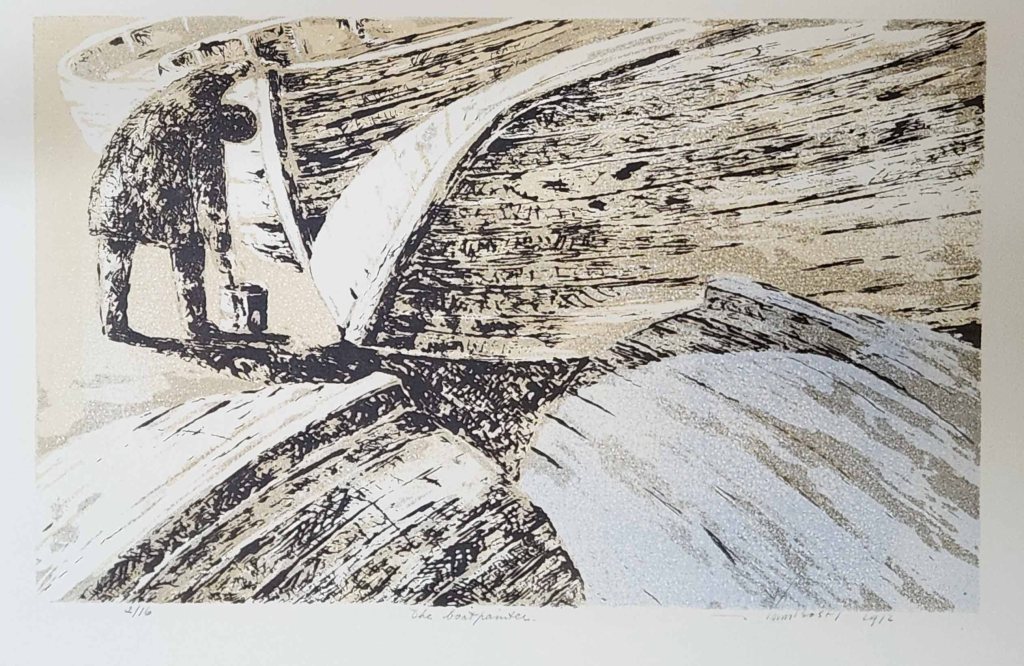
1972, 40.7 cm x 25.5 cm (approx.), 5 screenings.
Reproduced here, 2/16
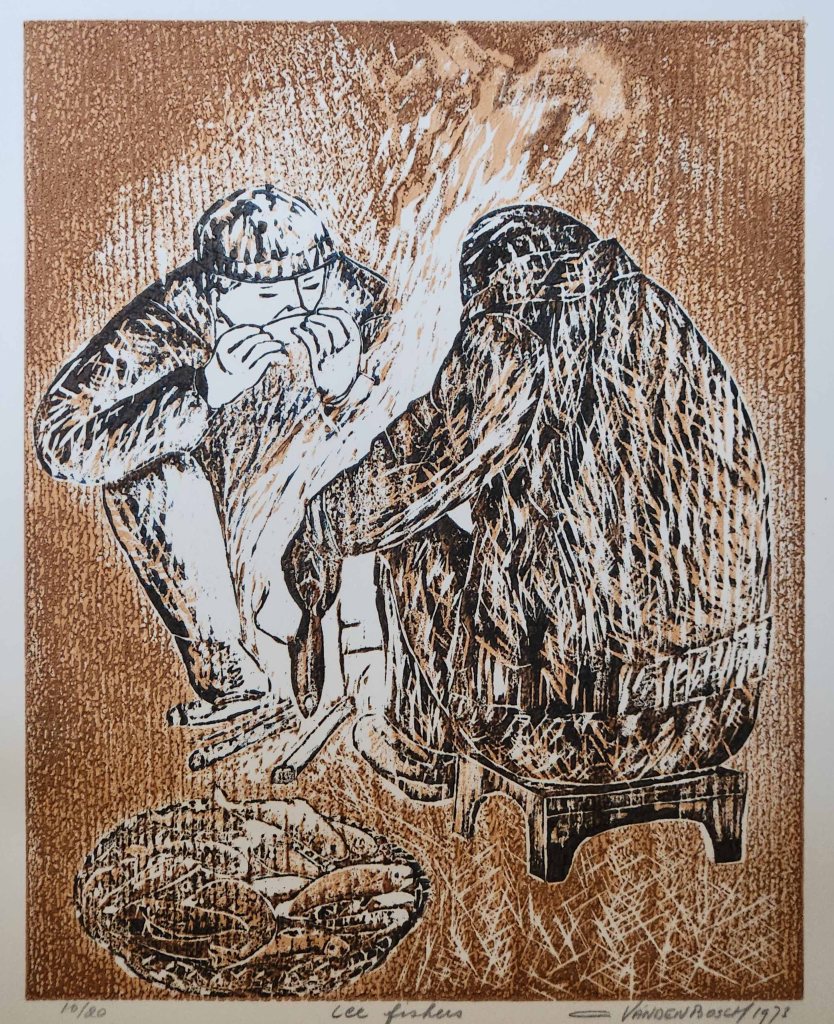
Wood block Print, 1973, four colours, one spruce block
28.4 cm x 35.5 cm (approx.)
Shown here, 10/20.

Wood block Print, 1973, six colours, one spruce block, one pine block
28.3 cm x 35.5 cm (approx.)
Shown here, 18/18.
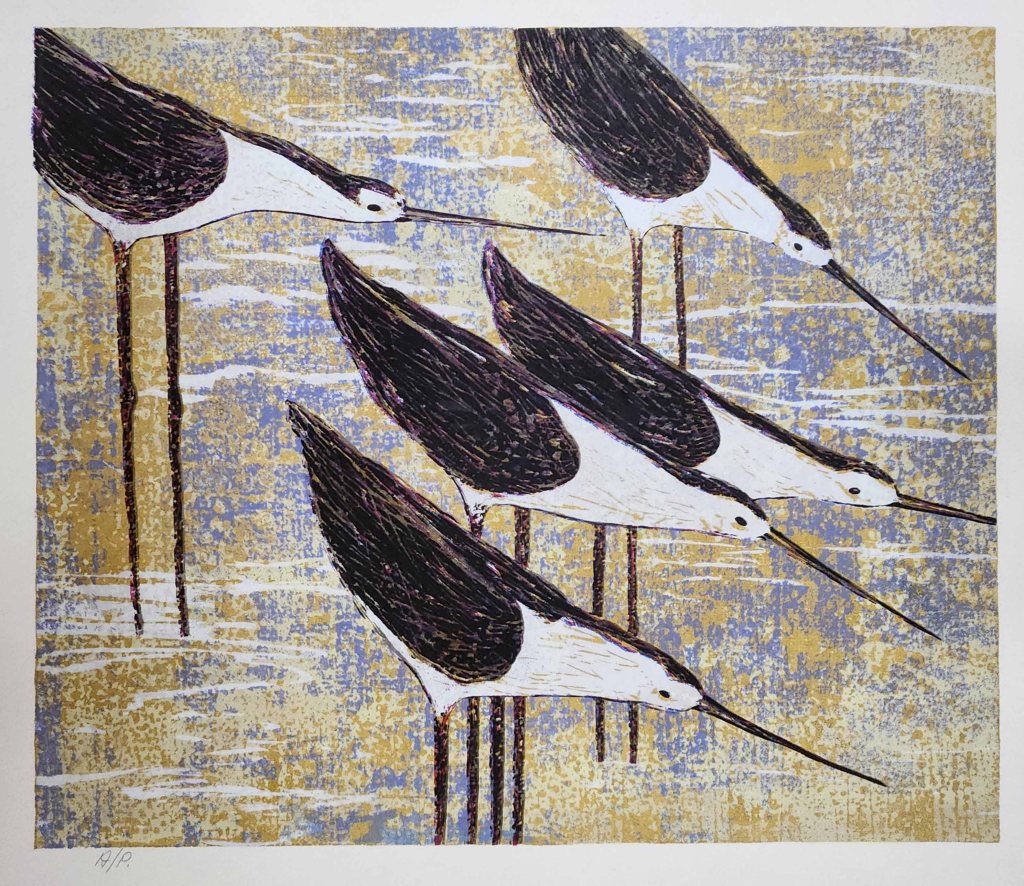
Serigraph 1973, 35.7 cm x 30.6 cm (approx.),
5 screenings.
Reproduced here, A.P./12
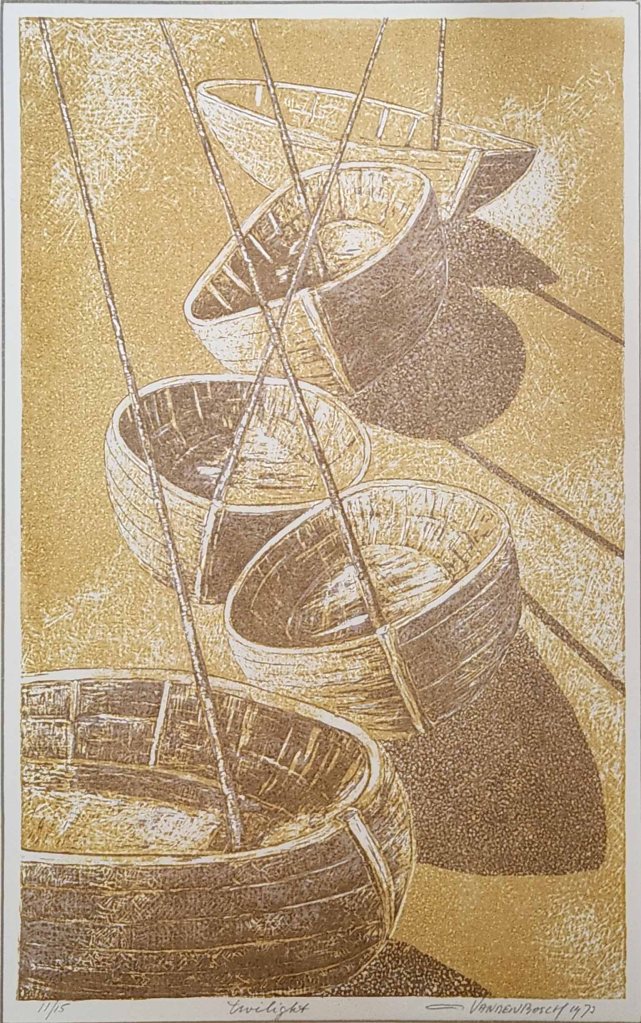
Serigraph 1973, 25.4 cm x 40.8 cm (approx.),
4 screenings.
Reproduced here, 11/15
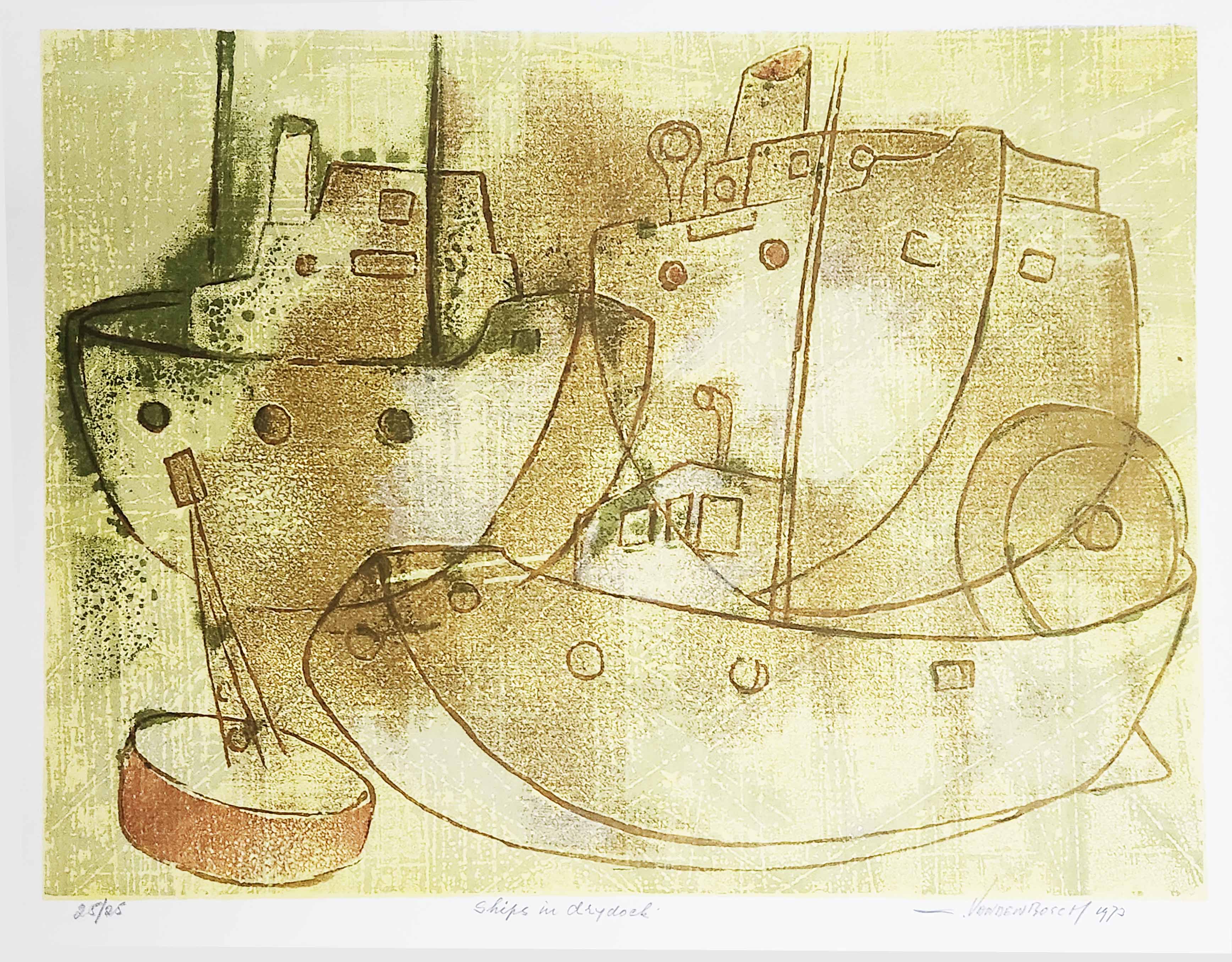
Serigraph 1973, 40.7 cm x 30.2 cm (approx.); 5 screenings.
Reproduced here, 25/25
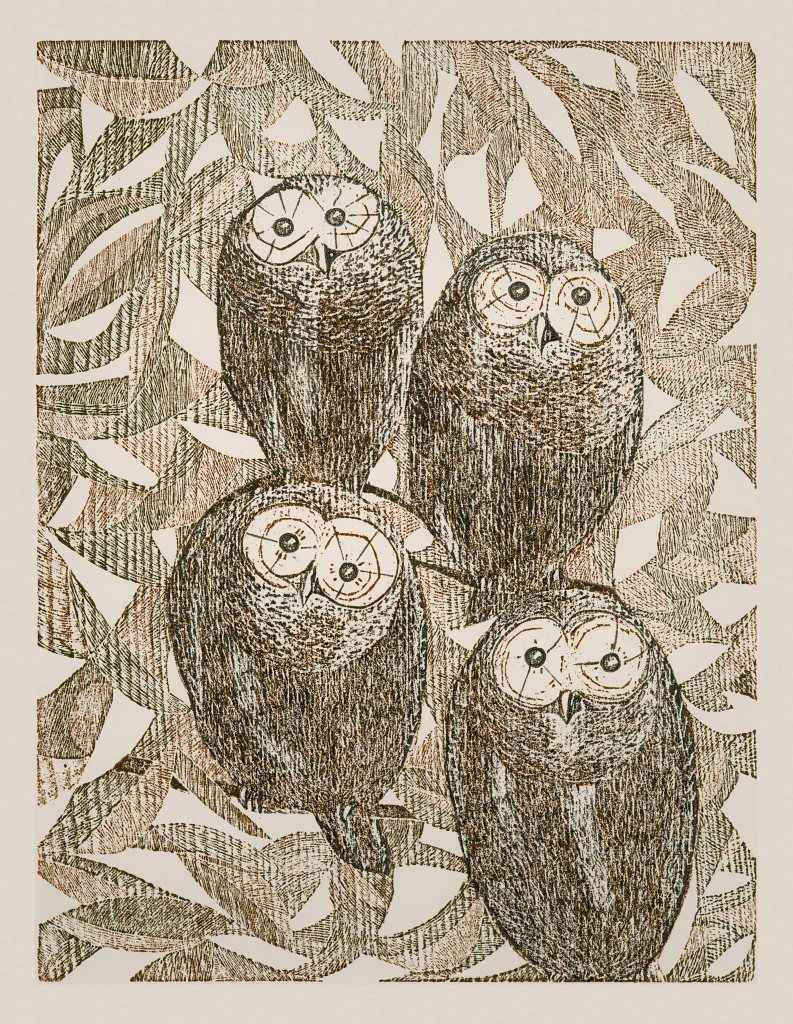
1974 Wood Block print – two spruce blocks, three colours
27.5 cm x 35.5cm (approx.)
A total of nineteen prints, signed and numbered by the artist, are in existence.
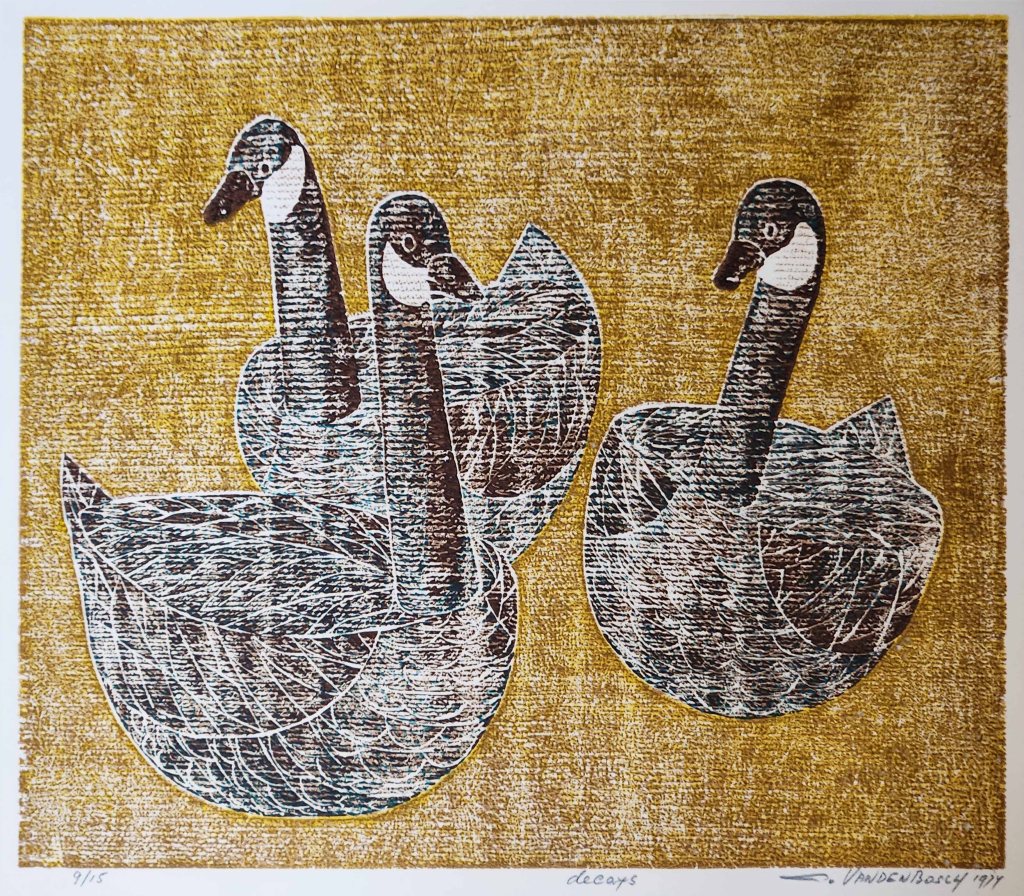
1974 Wood Block Print, two spruce blocks, four colours
35.4 cm x 28.2 cm (approx.)
Shown here, 9/15
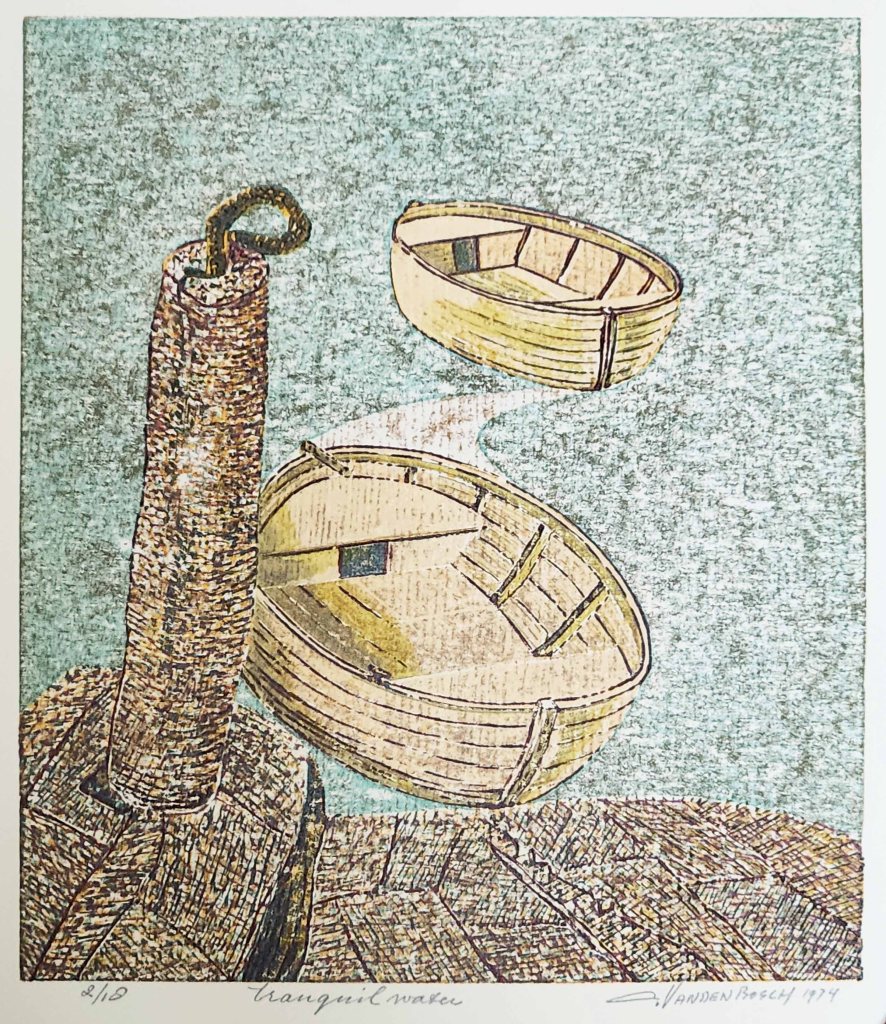
1974 Wood Block Print, one spruce block, two cedar blocks, nine colours
22.8 cm x 27.9 cm (approx.)
Shown here, 2/18
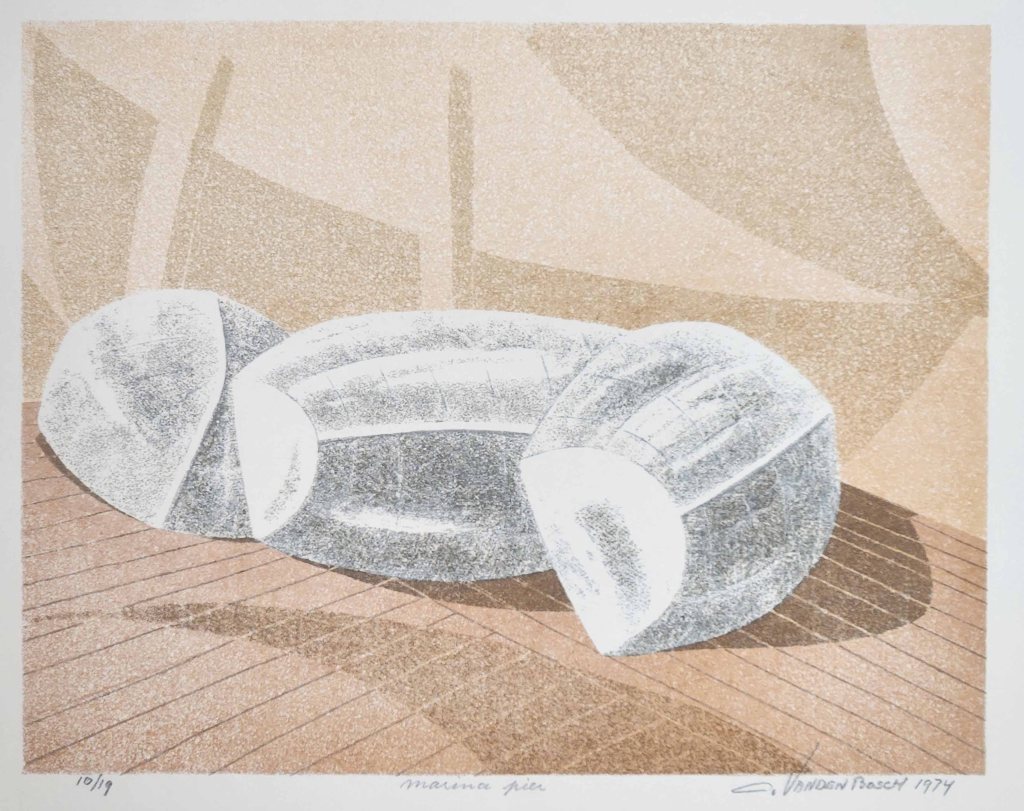
Serigraph 1974, 35.0 cm x 27.4 cm (approx.), 6 screenings.
Reproduced here, 10/19
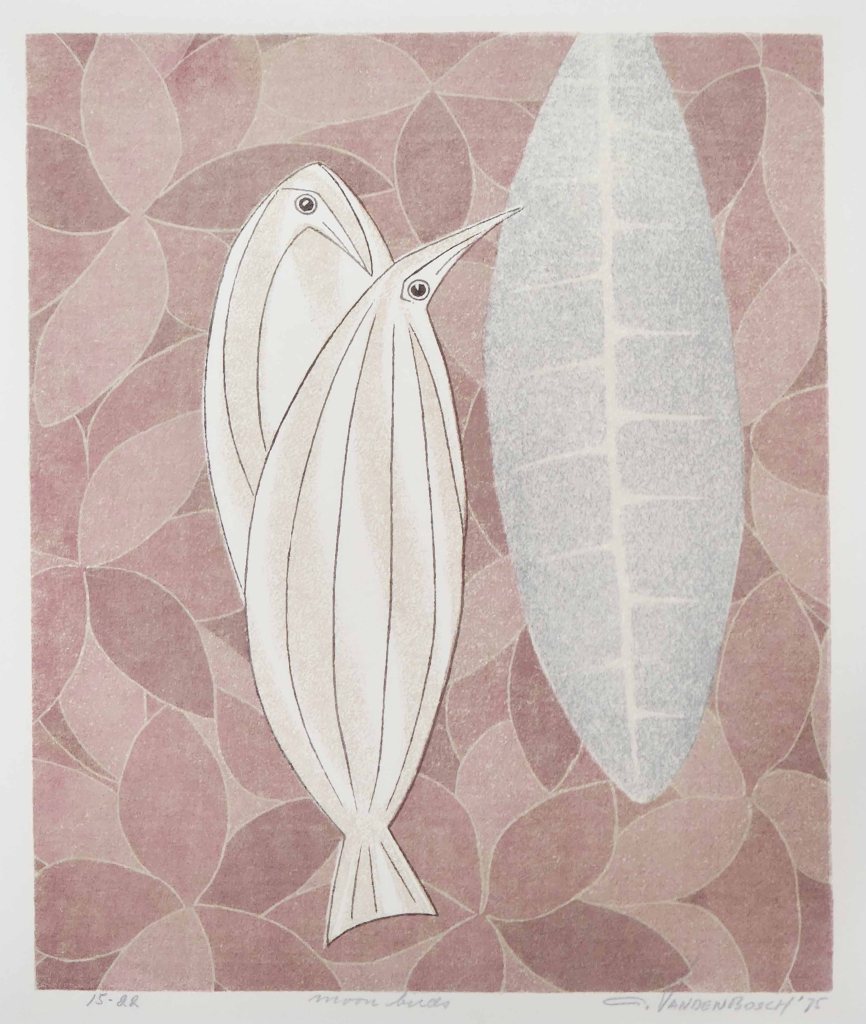
Serigraph 1975, 25.3 cm x 30.5 cm (approx.), 9 screenings.
Reproduced here, 15/22
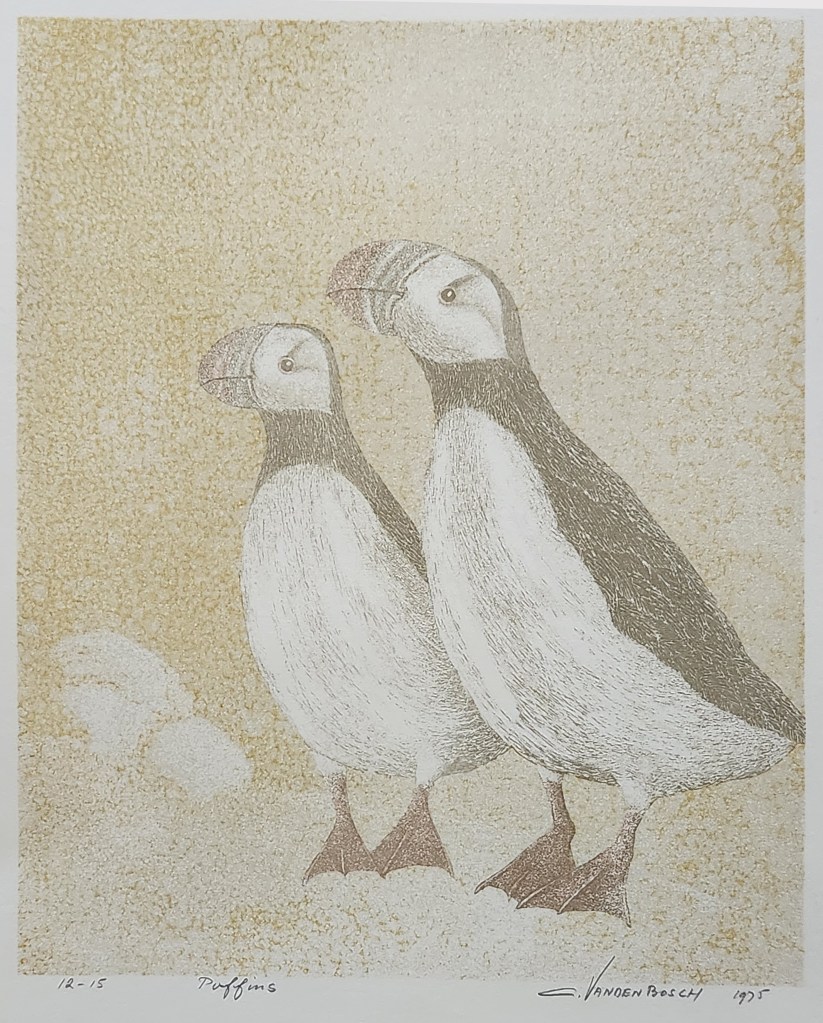
1975, 27.8 cm x 34.2 cm (approx.), 5 screenings.
Reproduced here, 12/15
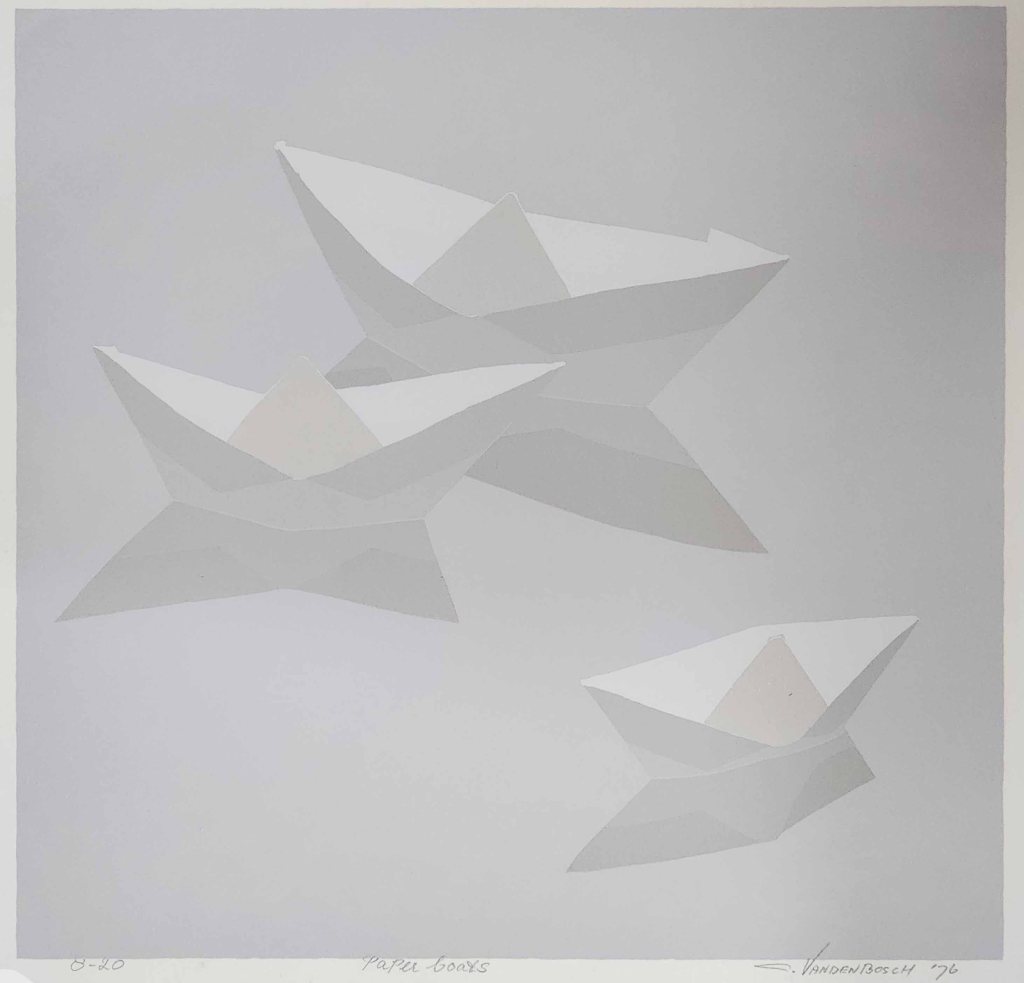
Serigraph 1976, 34.4 cm x 33.1 cm (approx.),
6 screenings.
Reproduced here, 8/20
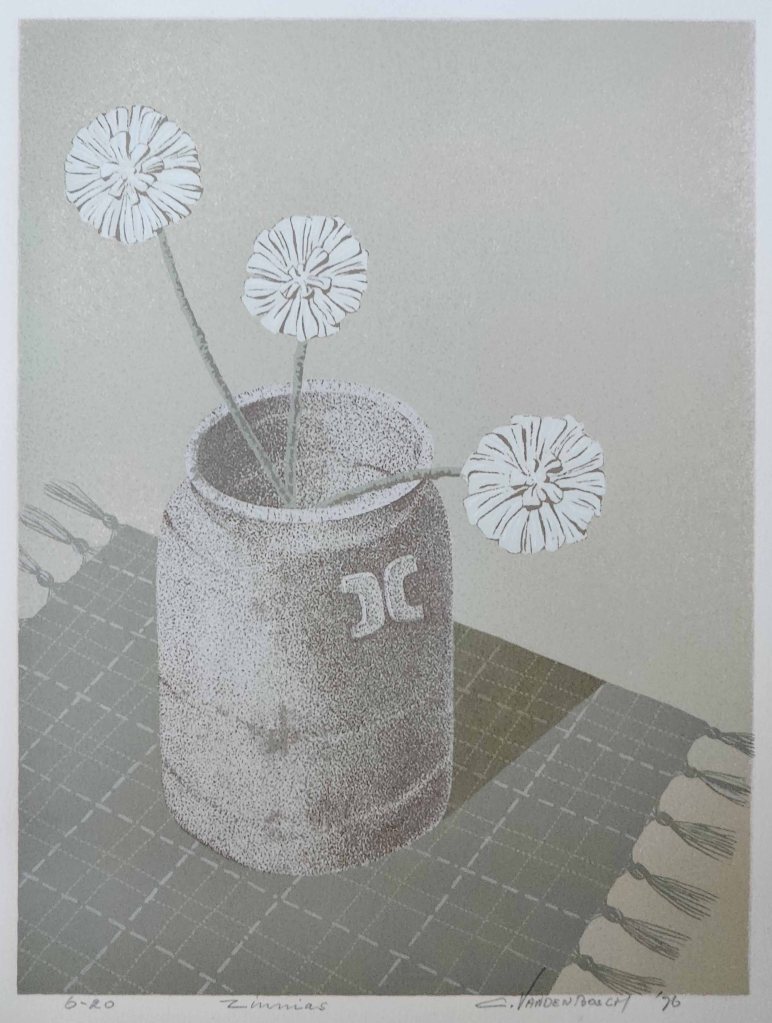
Serigraph 1976, 25.3 cm x 33.1 cm (approx.), 8 screenings.
Reproduced here, 6/20
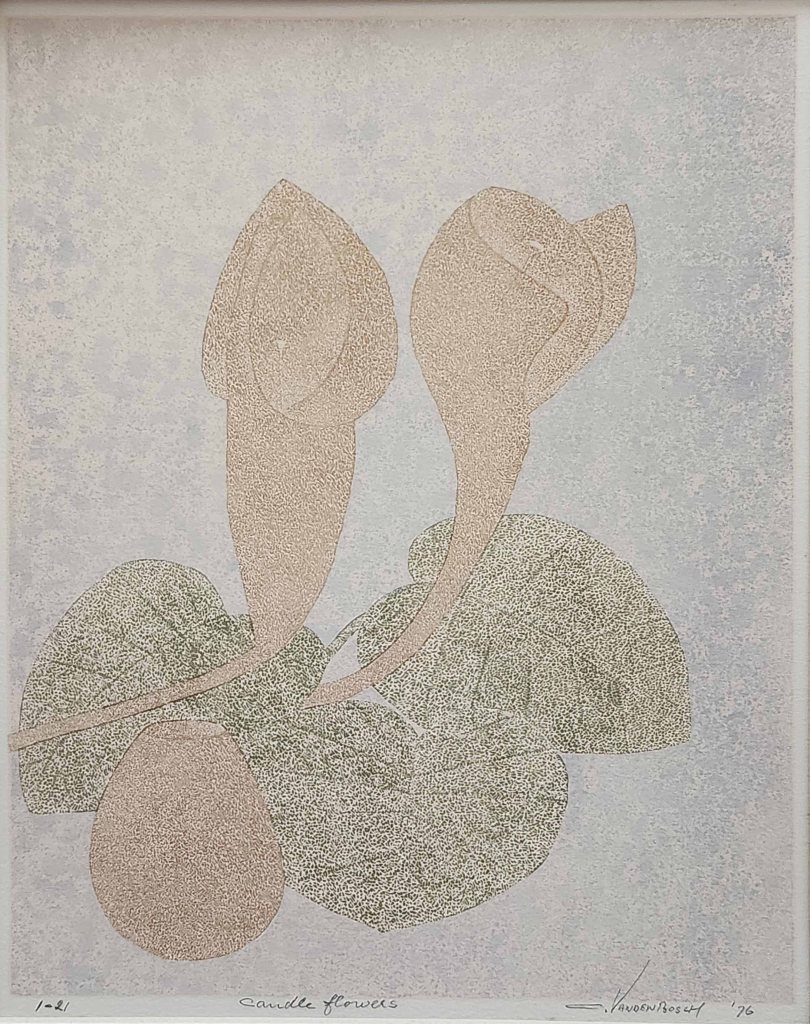
1976, 27.8cm x 35.5 cm (approx.),
4 screenings.
Reproduced here, 1/21
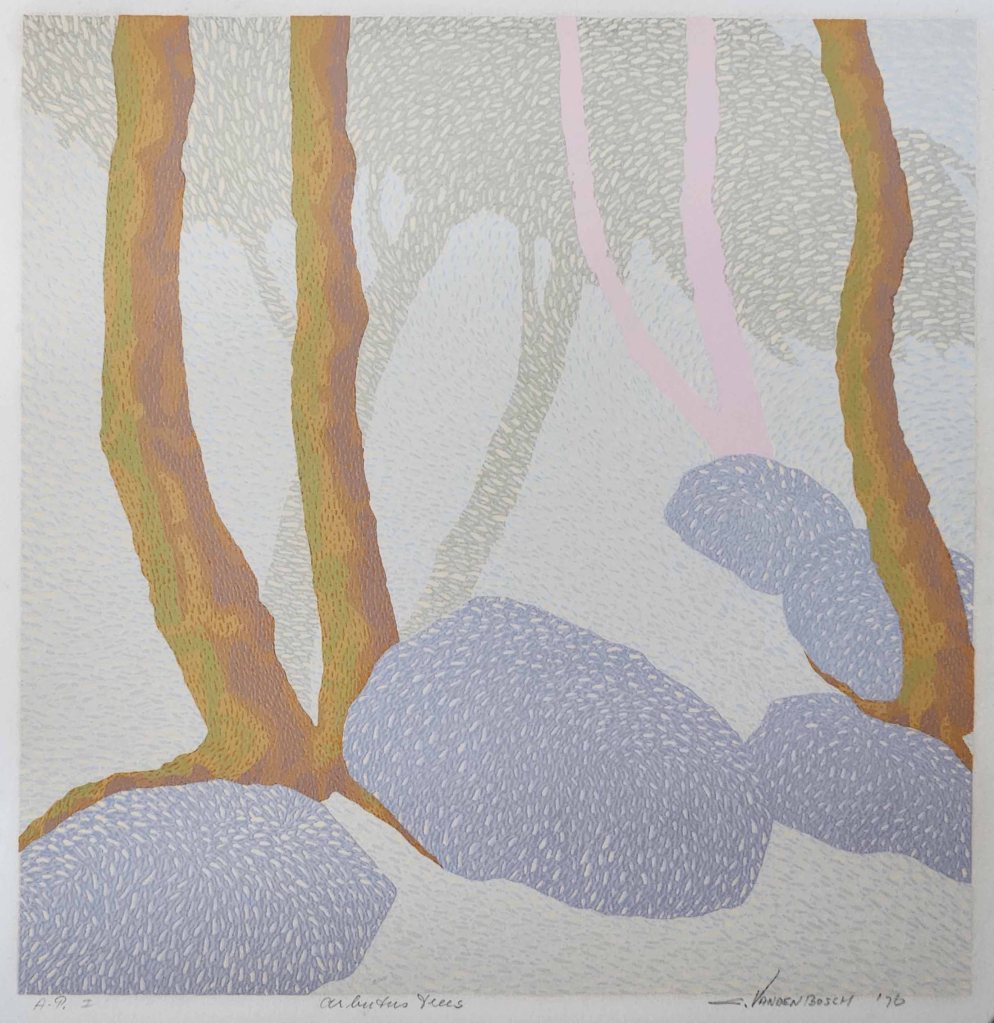
Serigraph 1976, 32.5 cm x 32.5 cm (approx.), 9 screenings.
Reproduced here, Artist’s Proof I
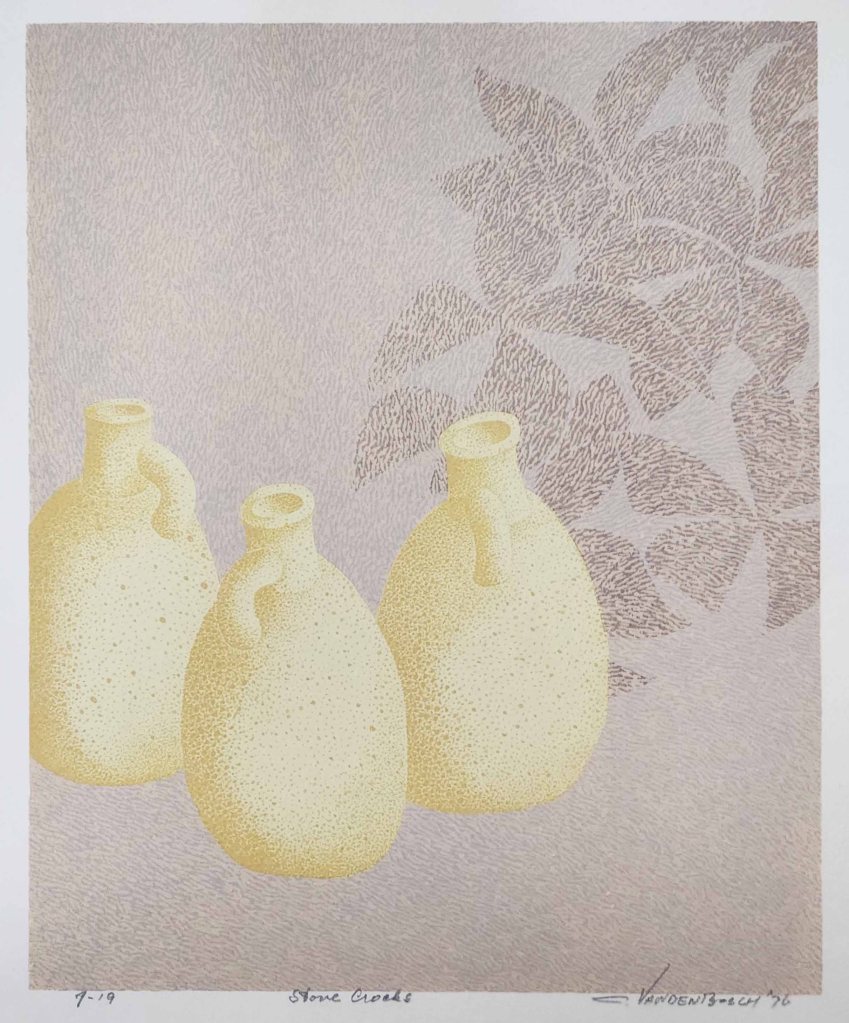
Serigraph 1976, 27.9 cm x 34.3 cm (approx.),
6 screenings.
Reproduced here, 7/19
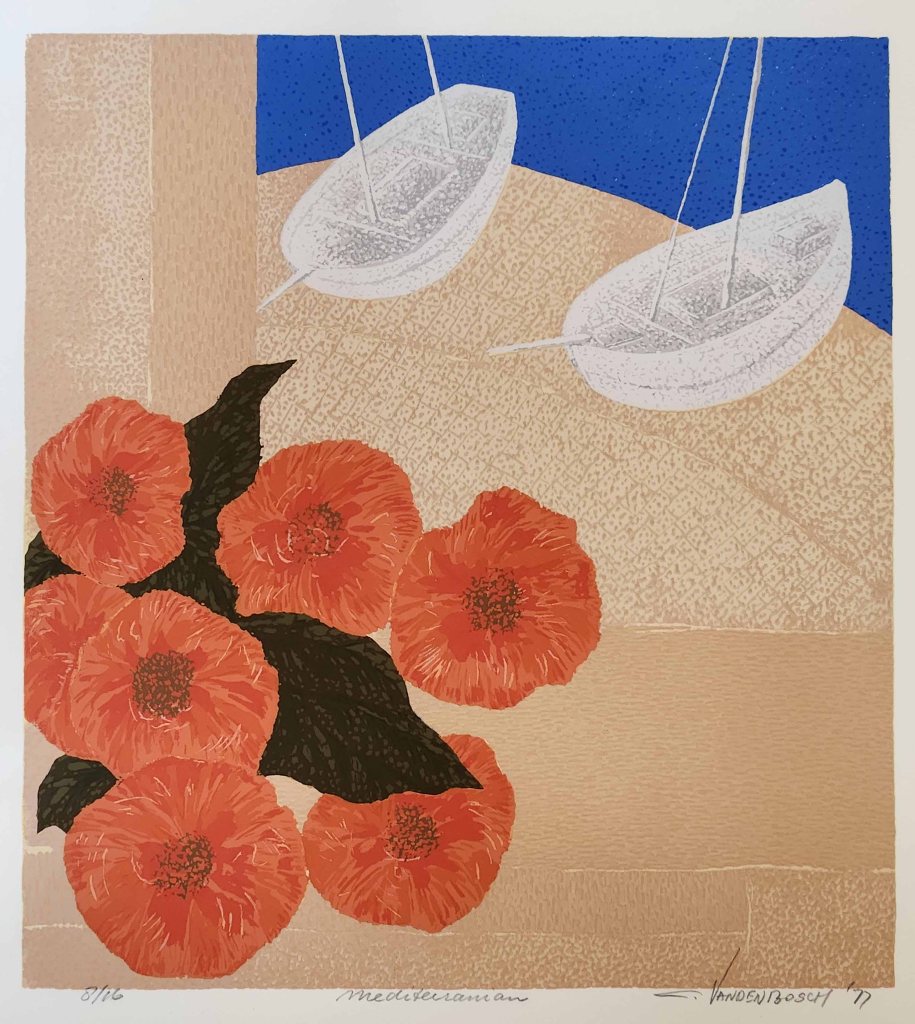
Serigraph 1977, 27.9 cm x 30.7 cm (approx.), 10 screenings.
Reproduced here, 8/16
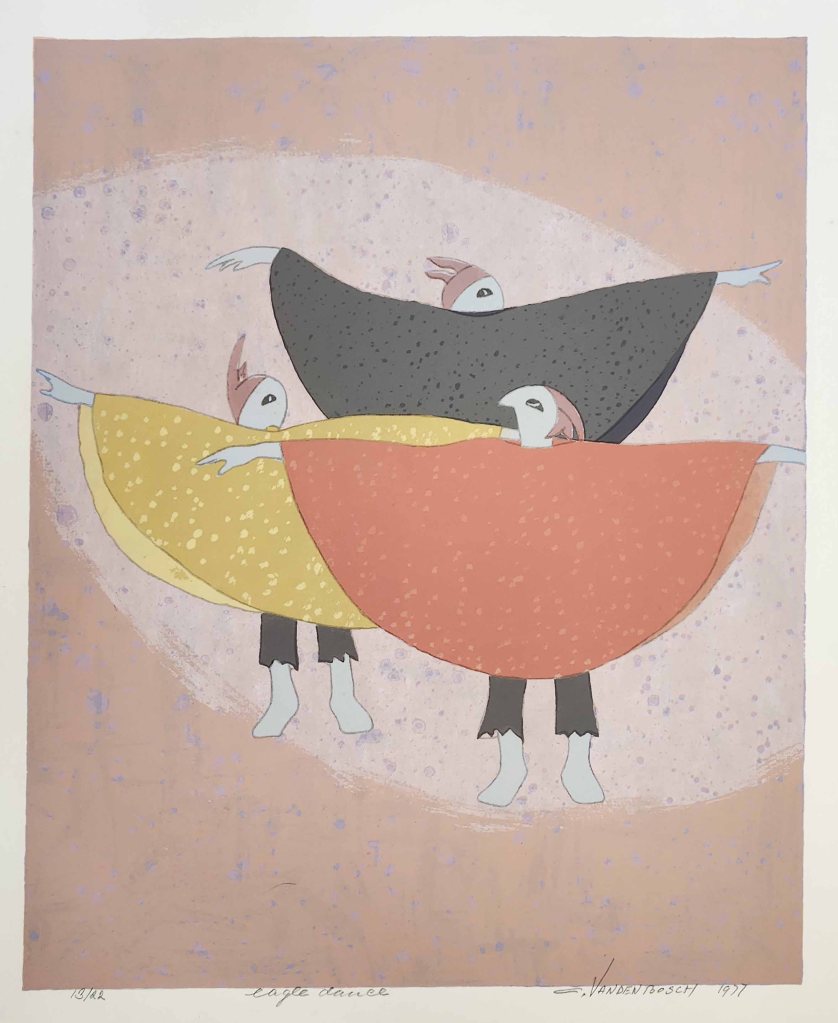
Serigraph 1977, 28.0 cm x 34.3 cm (approx.), 11 screenings.
Reproduced here, 13/22

Serigraph 1977, 29.3 cm x 33.2 cm (approx.), 12 screenings.
Reproduced here, 5/18
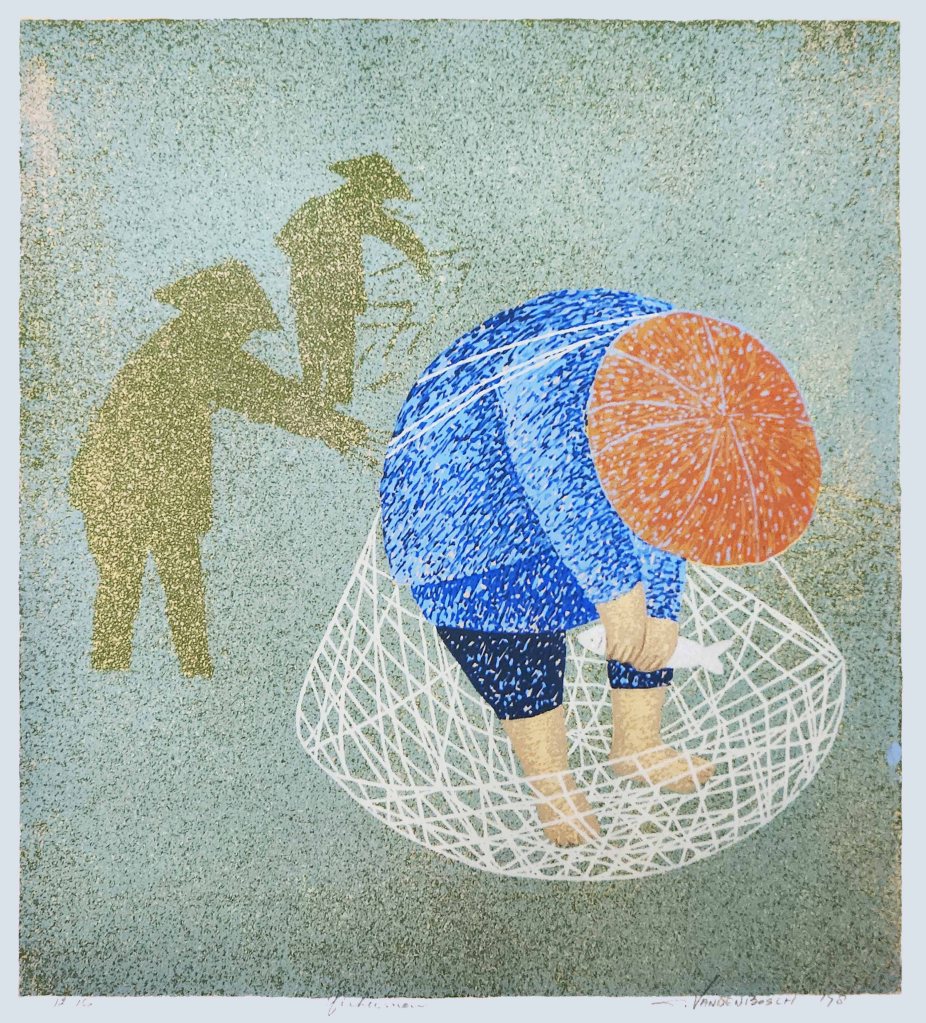
Serigraph 1978, 30.5 cm x 35.1 cm (approx.), 11 screenings.
Reproduced here, 12/16
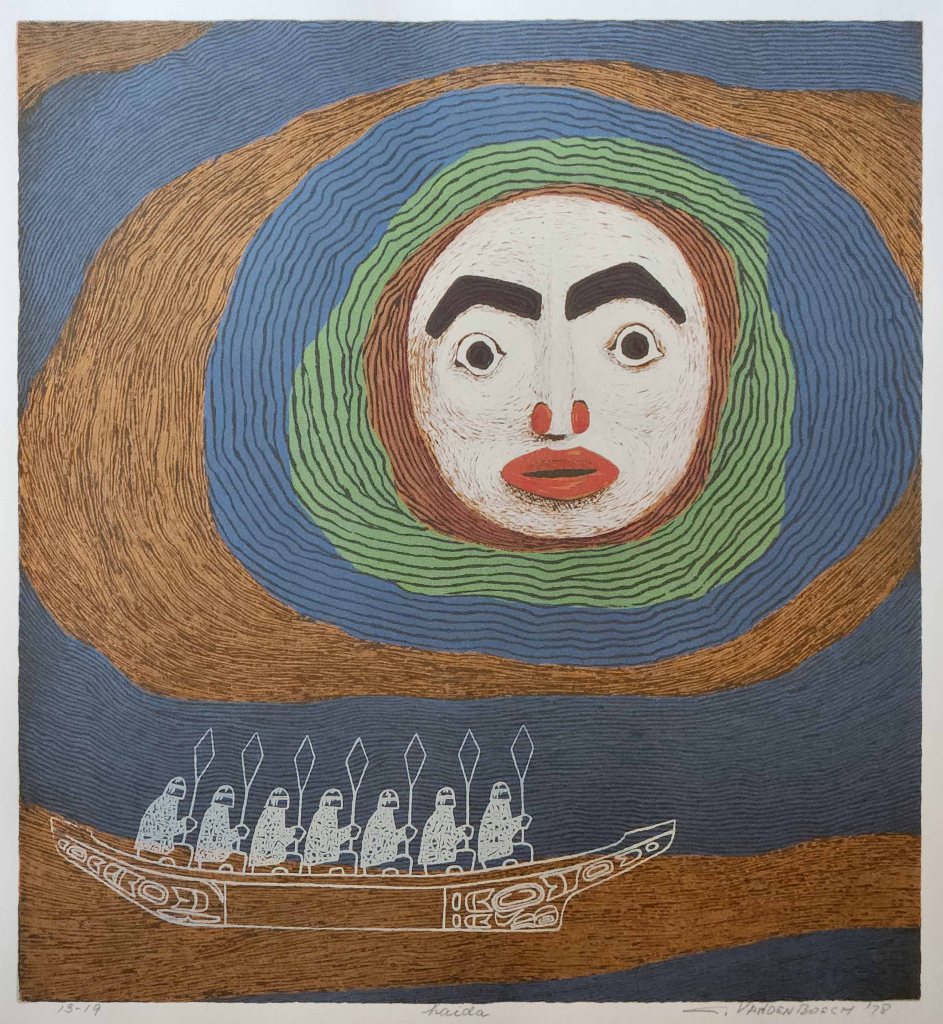
Serigraph 1978, 30.5 cm x 35.1 cm (approx.), 6 screenings.
Reproduced here, 13/19
The design incorporates the Haida “Moon Mask” and a war canoe. The background consists of the wood-grain pattern of cedar, a wood commonly used by aboriginal peoples of the Canadian West Coast in construction and crafts.

Serigraph, 1979, 29.3 cm x 34.8- cm (approx.),
10 screenings.
Reproduced here, 8/21
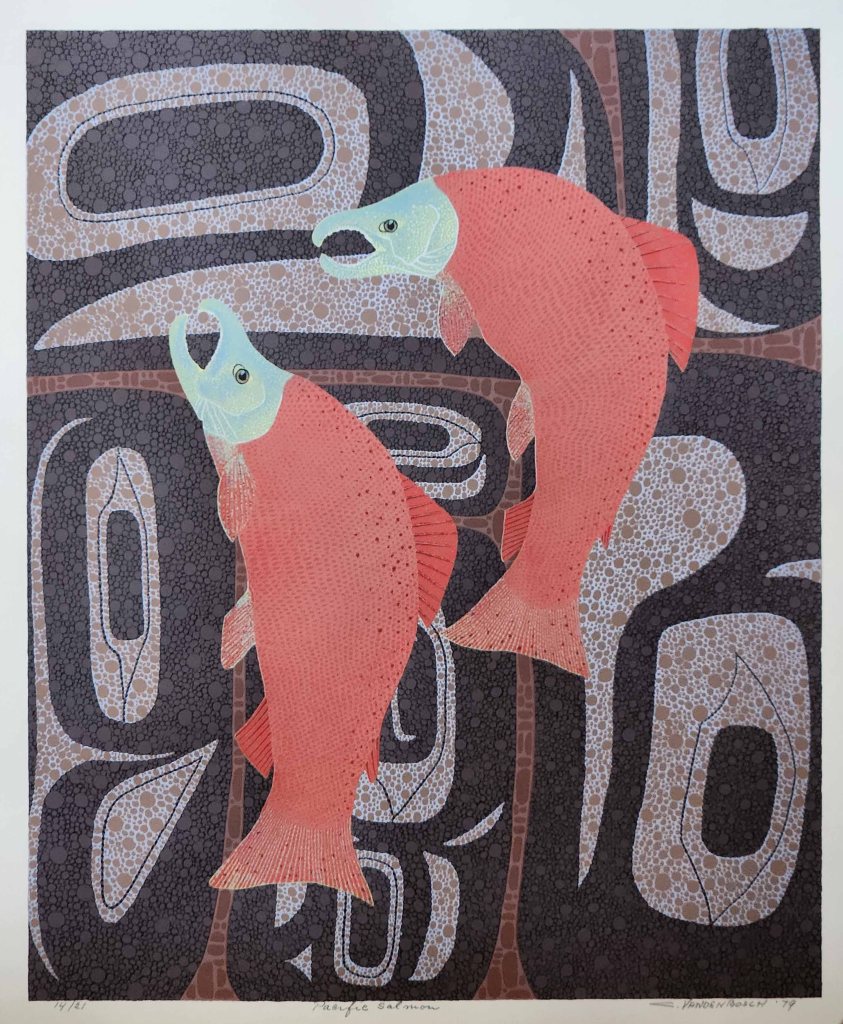
Serigraph 1979, 29.3 cm x 35.6 cm (approx.), 12 screenings.
Reproduced here, 14/21
Shown are two salmon swimming upstream to spawn. Indeed, they are captured in mid-leap up what are sometimes significant waterfalls in the mountainous country that is their home. The colouration on the fish in this image happens only in spawning season. In the background is the west-coast aboriginal design representing the salmon, rendered in hundreds of bubbles, each of which was carefully hand-drawn in glue on the synthetic silk screen.
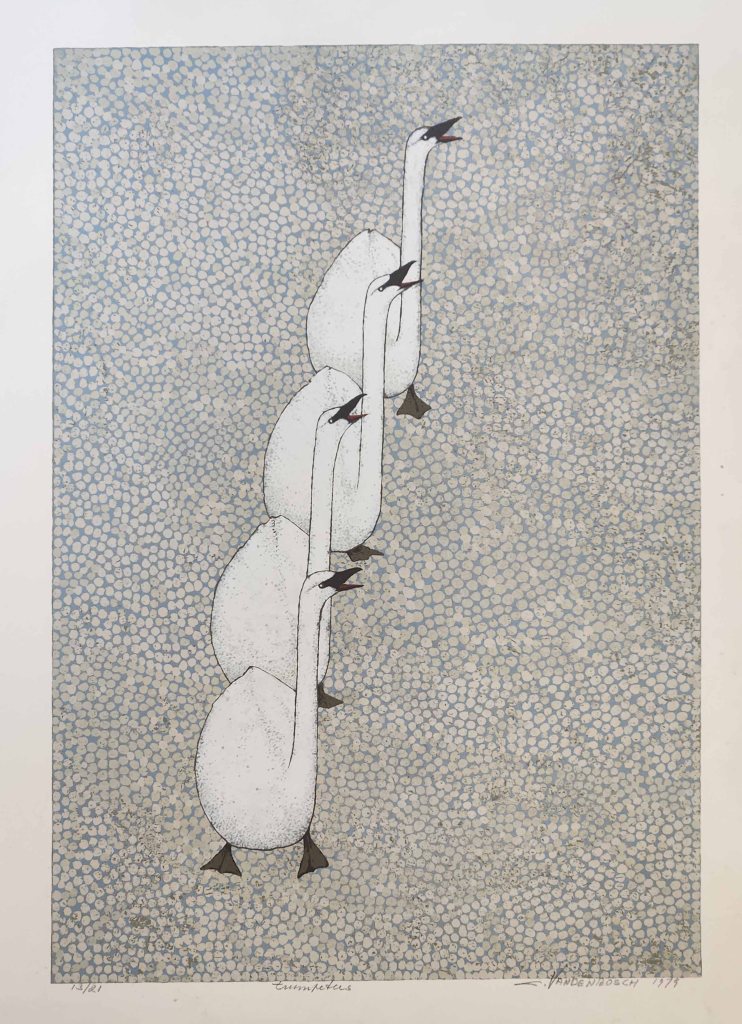
Serigraph 1979, 25.5 cm x 37.0 cm (approx.), 9 screenings.
Reproduced here, 13/21
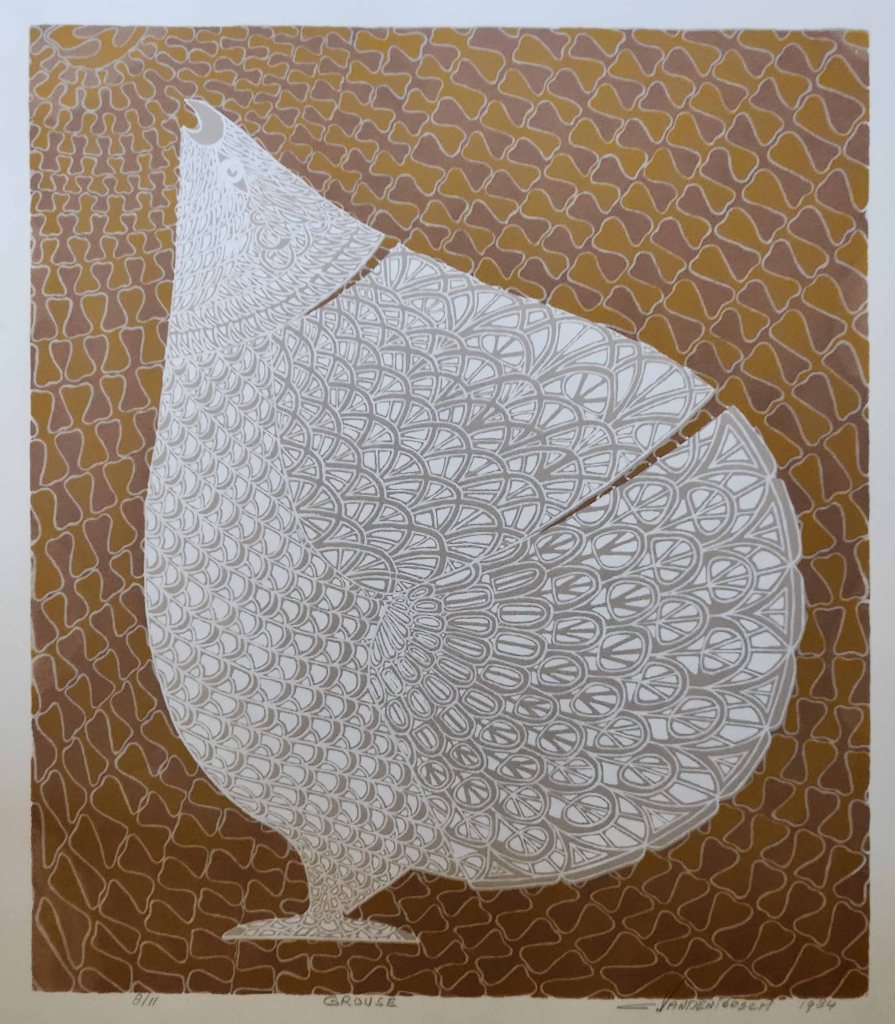
Serigraph 1984, 30.3 cm x 35.5 cm (approx.), 4 screenings.
Reproduced here, 8/11
 The Art of Carl van den Bosch